What dog training progress looks like
If you’ve been working on training for a while and you’re unsure whether things are actually improving, you’re in good company. This comes up all the time. With puppies who feel like they should be settling by now. With teen dogs who seemed to be doing better and then suddenly felt harder again. With dogs who struggle around people, dogs, or busy environments and leave their guardians wondering how to tell if the work is landing.
Dog training progress rarely announces itself clearly. It doesn’t usually show up as a clean before and after moment or as the sudden disappearance of the behaviour you’re working on. More often, it shows up sideways. In small shifts. In moments you only recognize once you know where to look.
Let’s take a closer look at what dog training progress actually looks like, especially in the early and middle stages, when it’s easiest to miss.
Quick takeaways
- Dog training progress often shows up as changes in regulation before changes in behaviour
- Recovery time is one of the clearest early indicators
- Plateaus are a common part of learning
- Some days support skill building, others support the nervous system
- Interpreting progress is a skill that develops alongside training
Dog training progress is often subtle at first
When people picture dog training progress, they tend to imagine visible, measurable change. A puppy who stops biting. A teen dog who finally walks politely on leash. A dog with social sensitivity who no longer reacts when they see another dog across the street.
Those shifts can happen, but they’re rarely the first thing to change.
In the early stages of learning, progress often shows up as changes in emotional regulation. Work on how the brain processes emotion and threat helps explain why this happens. Joseph LeDoux’s work on emotion circuits in the brain describes how emotional responses are shaped by fast, automatic neural pathways, and how these systems influence learning, memory, and behaviour long before conscious control is involved.
When a dog’s nervous system has more capacity to settle and recover, learning becomes more accessible and more stable. Behaviour doesn’t instantly transform, but the conditions for change begin to take shape.
In day to day life, that can look like:
- A puppy who still jumps on visitors, but pauses to sniff the floor or grab a toy before launching again
- A teen dog who still pulls on leash, but checks in more often on quieter stretches
- A dog with social sensitivity who still reacts to other dogs, but recovers more quickly once distance is created
Take a puppy learning to cope with excitement when guests arrive. Early on, the puppy might jump, mouth, and zoom without pause. A few weeks into training, the puppy may still jump, but they disengage sooner. They wander off. They settle briefly. Those moments matter. They suggest the puppy’s nervous system is beginning to organize itself around the situation.
Or consider a teen dog whose walks feel unpredictable. Some outings go smoothly. Others feel like everything falls apart. Often, the first sign of dog training progress is not a perfect walk, but a faster reset afterward. The dog settles more quickly at home. They recover emotionally instead of staying amped up for hours.
Dog training progress usually begins with flexibility. Shorter stress responses. A little more space between trigger and reaction. When you know to look for those shifts, progress becomes much easier to recognize.
Plateaus are part of dog training progress
At some point, most training plans hit a stretch where things feel flat. You’re still putting in the work. You’re still managing thoughtfully. And yet the changes you expected to see by now aren’t showing up in obvious ways.
This phase shows up across ages and contexts.
With a puppy, it often looks like near-misses. Potty accidents are rare, but still happen when the puppy is overtired. Biting has improved, but flares up again in the evenings. The overall picture is better, just not consistently smooth.
With a teen dog, progress can feel unpredictable. Walks are manageable in quieter areas, harder again near distractions. Some days feel solid. Others feel like a step backward, even though nothing obvious has changed in the plan.
For dogs with social sensitivity, plateaus often appear after early gains. Familiar routes feel easier. Predictable setups go well. Then a change in routine, a busier environment, or a stressful day brings the behaviour back into view.
What’s happening in these moments isn’t always obvious from the outside. Sometimes the dog is consolidating new skills and regulation. Sometimes the emotional load is higher than usual. Sometimes the plan needs adjustment. Often, it’s a mix of all three.
This is where context matters. A plateau can mean the nervous system is stabilizing. It can also mean the dog is carrying more stress than they can comfortably process that day. The same outward picture can have very different explanations underneath it.
Rather than being a signal to push forward or pause by default, plateaus are best treated as information. They invite a closer look at the dog’s recovery, environment, recent stressors, and the way difficulty is being layered in. That kind of interpretation is what keeps dog training progress moving in a sustainable direction.
Recovery time is one of the clearest signs of dog training progress
One of the most useful ways to read dog training progress is to pay attention to recovery. Recovery is what happens after something challenging. How long it takes. How much support is needed. How easily the dog finds their way back to baseline.
This shows up differently depending on the dog and the situation.
With a puppy, recovery might look like settling more quickly after a burst of excitement. The puppy still gets wound up during play or when guests arrive, but they come down faster. They nap sooner. They’re able to rejoin the household without staying keyed up for the next hour.
With a teen dog, recovery often shows up after walks. Early on, a hard walk might mean pacing, barking at noises, or difficulty settling for the rest of the evening. As training and maturity progress, the walk itself may still have challenging moments, but the dog resets more quickly afterward.
With dogs who experience social sensitivity, recovery is often one of the first things to shift. The dog may still react when they see another dog or person, but the intensity fades sooner. Their body softens more quickly. They’re able to take food again. They reconnect with their handler instead of staying locked in the moment.
Recovery shows up differently depending on the dog
Two dogs can have the same outward reaction and be in very different places in their training.
Imagine two dogs who both bark and lunge when they see another dog on leash. On the surface, they look identical. But what happens next tells a very different story.
One dog stays tense for minutes afterward. Their breathing stays fast. They can’t take food. They remain hyper-focused on the environment for the rest of the walk.
The other dog settles more quickly once distance is created. Their body softens. They can reorient to their handler. They’re able to move on without carrying the moment with them.
That “after” matters. It reflects how efficiently the nervous system is returning to baseline, and that’s where early dog training progress often shows up first.
Why recovery changes before behaviour
Recovery is such a useful signal because stress responses are shaped by context and prediction, not just the trigger itself. In How Emotions Are Made, neuroscientist Lisa Feldman Barrett’s work on how the brain constructs emotion describes how the brain uses past experience and current context to make sense of what’s happening in the moment.
In practical terms, this helps explain why the same situation can land differently from one day to the next, and why recovery often changes before behaviour does. As dogs gain more experience navigating a situation safely, their nervous systems become quicker to update and settle, even if the outward response still looks familiar.
When recovery time shortens, the system is gaining capacity. Behaviour doesn’t transform overnight, but the conditions for learning become more reliable. In the context of dog training progress, that shift is one of the earliest signs that the work is starting to land.
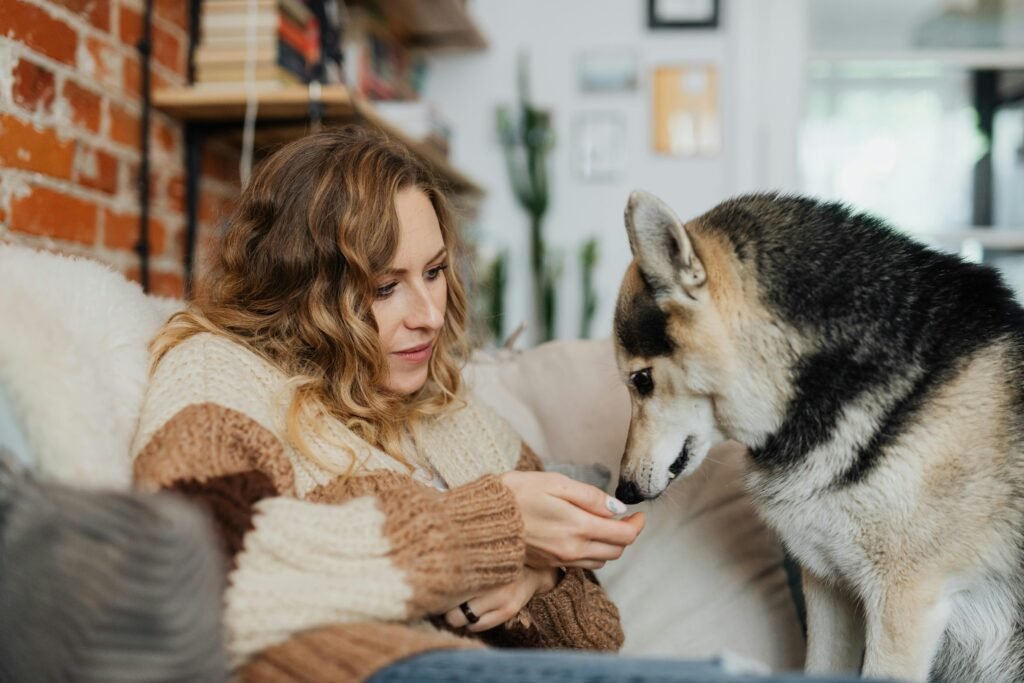
Dog training progress includes the human learning too
As dog training progress unfolds, something else is changing alongside the dog. The human is learning how to read what they’re seeing.
This doesn’t usually feel dramatic. It shows up in quieter decisions. When to keep going. When to make things easier. When to call it a day and try again tomorrow.
With a puppy, this might look like recognizing that evening chaos isn’t a training failure, it’s fatigue. The same puppy who can focus beautifully in the morning struggles at night, not because the learning disappeared, but because their capacity did. Over time, guardians get better at spotting that pattern and adjusting expectations before things unravel.
With a teen dog, it often shows up as pacing decisions. A walk that starts well begins to feel heavier. The dog is pulling more. Attention is harder to hold. Early on, it’s tempting to push through. Later, many guardians start choosing shorter routes, quieter detours, or earlier exits, not as avoidance, but as support.
For dogs with social sensitivity, this learning curve can be especially important. Guardians begin to notice when a setup is just within reach versus when it’s tipping into too much. Distance choices get made earlier. Food comes out sooner. The plan shifts in real time instead of after things escalate.
This is where dog training progress becomes less about following a plan and more about responding to feedback.
Sometimes progress slows because the dog is carrying a heavier emotional load that day. Sometimes the environment is working against the plan. Sometimes the technique being used isn’t the best match for the moment, even if it’s a good technique overall.
This idea is well captured in Karen Pryor Academy’s article on responding to errors in training, which emphasizes adjusting the setup rather than blaming the learner when things don’t unfold as expected. The same principle applies here. Behaviour is information. It tells you something about the fit between the dog, the environment, and the plan.
Dogs don’t fail reps. They give feedback.
Learning to interpret that feedback, and respond without urgency or judgement, is part of what keeps dog training progress moving in a sustainable direction.
When dog training progress slows, alignment is often the missing piece
When dog training progress feels uneven or harder to read, it’s tempting to look for a single explanation. In practice, it’s usually about alignment. How well the plan, the environment, and the dog’s capacity line up in that moment.
This shows up in small, everyday ways.
With a puppy, misalignment often looks like asking for focus when the puppy is tired, hungry, or overstimulated. The same puppy who can engage beautifully in a short morning session struggles later in the day. Nothing about the learning has disappeared. The conditions just aren’t the same.
With a teen dog, alignment often shifts with context. A skill that holds together in familiar spaces unravels in new ones. Distance gets harder to manage. Distractions carry more weight. The dog hasn’t lost the skill. The environment is asking more than it did before.
For dogs with social sensitivity, alignment is especially fluid. A setup that works well on one walk can feel overwhelming on another, depending on what came before. Noise, novelty, time of day, and recent stressors all shape how much the dog can access what they’ve learned.
Alignment also includes the how of training, not just the what. Timing, clarity, and reinforcement placement all influence how information lands. A method can be sound and still be a poor fit for the moment. That doesn’t make the plan wrong. It means it needs adjusting.
This is why dog training progress doesn’t follow a clean upward line. Capacity changes from day to day. Context changes from moment to moment. Progress shows up when the picture is well matched, and it gets harder to see when the pieces drift out of sync.
Reading alignment is part of the skill that develops alongside training. It’s less about finding the right answer and more about noticing when things fit and when they don’t. That awareness is what keeps dog training progress flexible and responsive over time.
Bringing it all together
Dog training progress doesn’t usually arrive in a straight line. It shows up in recovery before it shows up in behaviour. In flexibility before consistency. In better decisions before better outcomes.
Sometimes it looks like a puppy settling more quickly after excitement. Sometimes it looks like a teen dog bouncing back from a hard walk instead of carrying it all evening. Sometimes it looks like a dog with social sensitivity needing less time and space to recover, even if the reaction itself hasn’t disappeared yet.
And sometimes, progress shows up in the human. In noticing patterns sooner. In adjusting expectations before things tip over. In recognizing when a day calls for skill building and when it calls for support instead.
If you’re unsure whether what you’re seeing counts as progress, you’re not alone. This is exactly the kind of thing I help guardians sort through. In private training and behaviour consults, a big part of my role is helping you read what your dog is telling you, make sense of uneven progress, and decide what adjustments will actually support learning right now.
If you’d like help interpreting where your dog is at and what progress looks like for your situation, you can get in touch to book a session or start a conversation.
Frequently asked questions
How long should dog training progress take?
There’s no single timeline that fits every dog. Progress depends on factors like age, past experiences, environment, and emotional load. For many dogs, early progress shows up in recovery and regulation long before behaviour looks different on the outside.
Is it normal for progress to feel uneven?
Yes. Uneven progress is common, especially during developmental phases like puppyhood and adolescence, or when a dog is working through social sensitivity. Good days and harder days can coexist, even when learning is happening underneath.
My dog still reacts. Does that mean training isn’t working?
Not necessarily. Many dogs show progress through faster recovery, lower intensity, or better coping after a reaction. Those shifts often appear before the reaction itself fades or changes.
How can I tell whether my dog is overwhelmed or just distracted?
Looking at recovery can help. Dogs who are overwhelmed often take longer to settle, struggle to reorient, or can’t take food after a challenging moment. Dogs who are distracted usually recover more quickly once the situation changes.
When should I consider working with a trainer or behaviour professional?
If you’re unsure how to interpret what you’re seeing, or if progress feels hard to read despite consistent effort, having a trained eye can help. Support isn’t only about teaching new skills, it’s also about understanding what your dog’s behaviour is communicating and how to adjust thoughtfully.

Tabitha Turton
Tabitha is the founder and trainer at Belle & Bark. With a deep passion for canine behaviour and humane training, she’s committed to making life better for both ends of the leash. Her writing blends science-backed insight with real-life experience to help dog guardians feel more confident, compassionate, and informed.