Training with heart and science: What we believe
Dogs are always giving us information. A change in posture, a hesitation at the doorway, pulling towards an interesting smell, moving farther away from another dog, or suddenly struggling with something that seemed easy last week can all tell us something about what they’re experiencing.
Behaviour is part of how dogs respond to the world around them. Understanding it means looking beyond the behaviour itself and asking what might be shaping it.
Belle & Bark’s dog training philosophy starts with understanding the individual dog before deciding what kind of training or support will actually help. We consider their health, emotional state, environment, daily routines, relationships, previous learning and opportunities to do the things that matter to them. From there, we can use positive reinforcement, environmental changes and practical support to help dogs and their families navigate life together.
Quick takeaways
- Behaviour gives us information about what a dog may be experiencing.
- Health, environment, emotion, learning history and daily life can all shape behaviour.
- Welfare includes opportunities for positive experiences, not only the absence of distress.
- Positive reinforcement supports learning without deliberately using fear, pain or intimidation.
- Good training plans are flexible because individual dogs, needs and circumstances differ.
Behaviour gives us information
When a dog growls, jumps, freezes, barks, pulls on leash or walks away, it’s tempting to focus immediately on stopping the behaviour. I find it more useful to start by getting curious about it.
What happened just before? What does the dog do next? Is this behaviour new or part of a longer pattern? Does it happen everywhere or only in particular situations? What changes when we add distance, reduce noise, improve footing, offer more rest or change the way people respond?
Body language gives us part of the picture, but context matters too. A glance away doesn’t have one universal meaning, just as barking doesn’t have a single cause. Looking at patterns over time gives us a much better understanding of the individual dog than interpreting isolated behaviours on their own.
This is especially important when a dog is struggling with fear, anxiety, reactivity or aggression. A whole-dog behaviour assessment gives us room to look at the factors surrounding the behaviour rather than treating the visible response as the entire problem.
Looking at the whole dog
Training is useful, but training isn’t always the first or only thing a dog needs. Physical discomfort can change behaviour, as can poor sleep, an overwhelming environment, frustration, social conflict, changes in routine, previous experiences and limited opportunities to engage in behaviours that are important to the dog.
Animal welfare science gives us useful ways to think more broadly about those experiences. One framework that influences my work is the Five Domains Model of animal welfare, which considers nutrition, physical environment, health and behavioural interactions, and how those areas contribute to an animal’s mental state. Importantly, the model considers opportunities for positive experiences as well as the reduction of negative ones.
I don’t use the Five Domains as a checklist to run through before every training session. Its value is in reminding us that welfare is interconnected. A dog with sore hips may become reluctant to get into the car. A dog who rarely gets uninterrupted rest may find a busy outing harder to cope with. A dog who loves searching through long grass may gain something meaningful from having more opportunities to use their nose.
Sometimes teaching a new skill will help. In other situations, changing something about the environment, routine or expectations placed on the dog may make the biggest difference. Often, those pieces work together.
The individual dog matters
Every dog brings their own body, developmental history, learning experiences, genetics, preferences, sensitivities and ways of responding to the world. Those differences matter when we’re trying to understand behaviour or decide what kind of support will actually be useful.
My education in Family Dog Mediation has strengthened the way I look at those interacting pieces. It encourages us to consider learning, environment, genetics and the individual dog rather than assuming behaviour can be explained by training history alone.
Two dogs barking at visitors, for example, may be doing so in very different circumstances and for very different reasons. Two puppies of the same age may be ready for different experiences. One dog may find a busy neighbourhood interesting and enjoyable while another finds the same walk exhausting.
Good training has to leave room for those differences rather than applying the same formula to every dog.
Welfare includes positive experiences too

Supporting welfare involves more than preventing distress. Dogs also need opportunities for experiences that feel good to them, including exploring, sniffing, playing, foraging, moving comfortably, resting undisturbed and engaging socially in ways that suit the individual dog.
Those opportunities won’t look the same for everyone. Some dogs love tearing apart cardboard, digging, searching for food or investigating every interesting smell on a walk. Others may be more interested in movement, social interaction or simply having a quiet place where they can rest without interruption.
That’s one reason enrichment at Belle & Bark isn’t about keeping dogs constantly entertained or giving them an endless supply of puzzle toys. I’m more interested in creating meaningful opportunities that fit the dog’s interests, abilities and current needs.
Paying attention to what dogs choose to do can also tell us something about them. The routes they prefer, the things they investigate, the activities they return to and the situations in which they seek interaction or choose space all add to the picture we’re building of that individual dog.
Learning is happening all the time
Dogs don’t only learn when we’re holding treats and asking for cues. They form associations with places, sounds, people and events, and they learn which behaviours lead to outcomes that matter to them.
Learning theory is therefore an important part of my work. Positive reinforcement helps us strengthen useful behaviours by following them with something the dog values. Classical conditioning helps us understand how associations develop, including emotional responses to things in the environment. Techniques such as shaping, desensitization and counterconditioning give us practical ways to teach new skills and gradually change responses.
You can explore those mechanisms in more detail in How dogs learn.
At the same time, the conditions in which learning takes place matter. A dog’s ability to participate can change with physical comfort, emotional state, the difficulty of the task, competing motivations and what is happening around them. If something that normally feels easy suddenly becomes difficult, that gives us useful information. Rather than simply repeating the cue more firmly or increasing the pressure, we can look at what has changed and adjust accordingly.
Why I use positive reinforcement
Belle & Bark uses positive reinforcement and does not deliberately use pain, fear or intimidation to teach dogs. There are good welfare reasons for that choice. Research comparing reward-focused and aversive training has found more stress-related behaviour and poorer welfare measures among dogs trained with more aversive methods. Research comparing reward-based training with electronic-collar approaches also found no advantage to the electronic collar and better performance on several measures in the reward-focused group.
But science isn’t the only reason this matters to me. Training is part of a relationship. I care about who I am when I interact with dogs, what they learn to expect from me, and how they perceive those interactions. I don’t want cooperation to depend on a dog avoiding something unpleasant that I control.
Positive reinforcement gives us a different way to approach teaching. We can ask what would make the behaviour we want worthwhile for this particular dog, then arrange the environment so they have a realistic opportunity to succeed.
Food is often a useful reinforcer, but it isn’t the only possibility. Access to sniffing, movement, play, distance, greeting someone, going through a door or another outcome the dog values may also reinforce behaviour. What actually functions as reinforcement depends on the dog and the situation, rather than what we assume should be rewarding.
Making room for choice
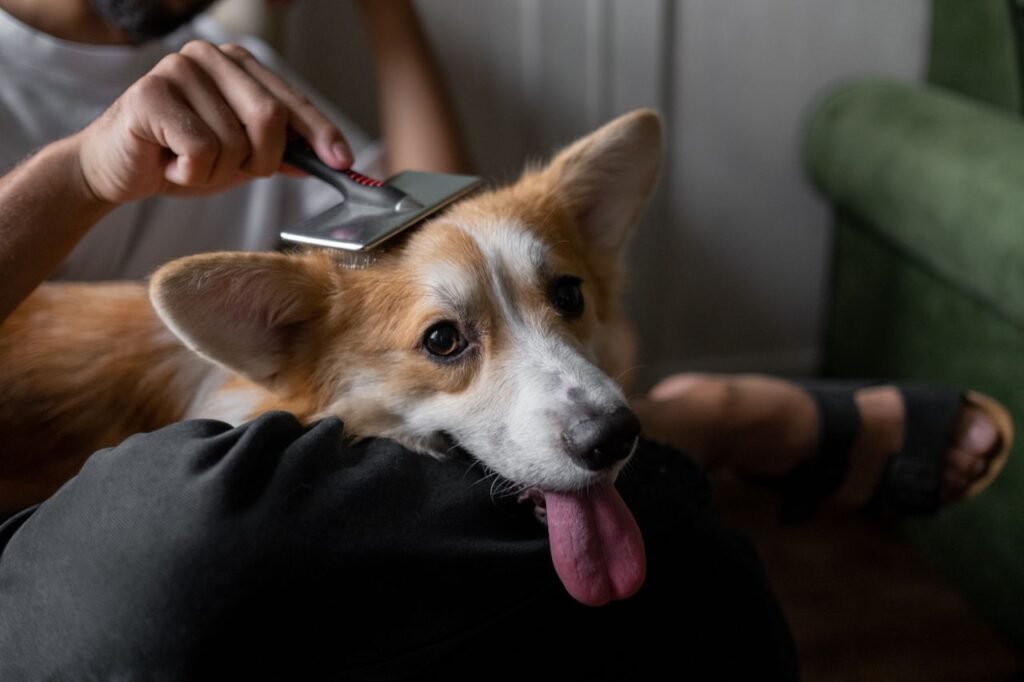
Dogs can’t make every decision about life in a human household. We decide when they cross a road, when they receive necessary medical care and plenty of other things that involve safety and responsibility. Within those boundaries, however, there are many opportunities to give dogs meaningful influence over what happens to them.
A dog might choose which direction to explore on part of a walk, opt into a training game, or have places at home where interaction isn’t expected. During cooperative care, we can teach dogs ways to indicate readiness and create opportunities for pauses when the situation allows.
Agency doesn’t mean handing every decision over to the dog. It means paying attention to the places where choice is possible, what those choices tell us about the individual, and how having some control over their experiences can contribute to welfare.
I’ve written more about this in Dog training and agency: Why choice matters.
Sometimes behaviour change starts outside training
One of the most useful questions in behaviour work is:
What can we change around the dog?
If a dog reacts every day through the front window, frosting part of the glass may help reduce repeated exposure while we work on the broader problem. If slippery flooring makes movement uncomfortable, adding runners may make it easier for the dog to move confidently through the home. If walks repeatedly place a dog too close to things they find frightening, choosing quieter routes and creating more distance can give everyone more room to work.
Management and environmental changes aren’t substitutes for training or signs that training has failed. They can reduce unnecessary difficulty and create better conditions for learning.
Health deserves the same consideration. Pain and other physical changes can affect behaviour, which is why a sudden or unexplained change may warrant veterinary assessment alongside behaviour support.
What progress can look like
Some changes are easy to spot. A dog comes when called, settles comfortably on their mat or walks through an area that previously caused difficulty.
Other signs of progress are quieter. A dog may recover more quickly after a startling sound, remain comfortable at a greater range of distances from something that worries them, or begin exploring again sooner after an uncomfortable moment. A guardian may notice an earlier sign that their dog is struggling and respond before the dog needs to escalate.
Looking at frequency, intensity, recovery, context and changes over time can therefore give us a richer picture than asking only whether a behaviour has disappeared. Sometimes the most meaningful improvement is that a dog is better able to cope, communicate and recover.
Following the science means staying curious
Dog behaviour science doesn’t stand still. Research continues to develop our understanding of learning, cognition, emotion, development and animal welfare, and professional practice should be able to change along with it.
That also means being careful about what any individual study can tell us. Research has limitations, findings need to be considered alongside the wider evidence, and an interesting result doesn’t automatically give us a simple explanation for what an individual dog is experiencing.
I regularly review current research, continue my professional education and discuss new findings with other behaviour professionals. You can read more about my education and approach.
For me, following the science includes being willing to change an explanation when better information becomes available. It also means being comfortable with uncertainty. Dogs can’t describe their subjective experiences to us in words, so we build our understanding from behaviour, physiology, context and the evidence available, while remembering that the individual in front of us may not fit neatly into our assumptions.
Where heart meets science
Science helps me ask better questions and gives me tools for understanding behaviour, learning and welfare. Observation helps me apply that knowledge to the individual dog rather than an abstract idea of how dogs are supposed to behave.
The heart part matters just as much. It shapes the relationship I want to have with dogs, the experiences I want to create for them and the choices I make when there is more than one way to change behaviour.
Training can teach wonderful things, from an everyday recall to skills that help a frightened dog participate more comfortably in the world. But I don’t want to judge success only by how a dog’s behaviour looks from the outside. I want to understand what that behaviour is telling us, support the dog’s welfare along the way, and help dogs and their people build lives that work well together.
Frequently asked questions
What does science have to do with dog training?
Behaviour science helps us understand how consequences and associations affect learning. Research in animal welfare, cognition, ethology and veterinary behaviour also helps us understand some of the wider factors that influence dogs. Training is one part of that broader picture.
Does Belle & Bark use positive reinforcement?
Yes. Belle & Bark uses positive reinforcement to teach new skills and does not deliberately use pain, fear or intimidation as training tools. Depending on the dog and the situation, support may also include management, environmental changes, enrichment, cooperative care and collaboration with a veterinarian or other qualified professional.
Why look at health and welfare when the concern is behaviour?
Behaviour can be affected by physical comfort, health, sleep, environment, emotional state, previous experiences and other aspects of a dog’s life. Looking at those areas can reveal useful changes that teaching a new behaviour alone might miss.
Do all dogs need the same training approach?
No. Learning principles apply broadly, but dogs differ in their health, history, preferences, motivation, sensitivities and environment. Those differences affect how we apply training and what kinds of support make sense for the individual dog.

Tabitha Turton
Tabitha Turton is the founder and trainer at Belle & Bark, offering dog training and behaviour support in Montreal. Her work draws on current behaviour and welfare science, positive reinforcement and Family Dog Mediation, with a focus on understanding the individual dog and the factors shaping their behaviour.
Her writing explores dog behaviour, learning and welfare, translating research and professional education into practical ideas for everyday life with dogs.