Dog training and agency: Why choice matters
Dogs live in a world where humans make most of the important decisions. We decide when they eat, where they walk, when they visit the vet, which spaces they can access and when they get to go outside.
Some of that control is necessary. We’re responsible for their safety and care. But because we control so much of their world, it’s worth thinking carefully about where dogs can have more influence over what happens to them.
Agency is about having meaningful opportunities to act on the environment, make decisions and influence outcomes. A growing body of animal-welfare research treats that sense of control as an important part of a good life.
Quick takeaways
- Small choices can make a dog’s day richer, more interesting and more their own.
- Agency gives dogs opportunities to influence what happens around them.
- The best choices are meaningful to the individual dog, not simply options we decide they should value.
- Homes, walks and daily routines can all offer more freedom to explore, engage and make decisions.
- Watching what dogs choose helps us learn more about who they are.
Choice, control and agency are related, but not identical
These ideas overlap, but they are not quite the same.
A choice means that more than one option is available. Control means that an animal’s behaviour can influence what happens next. Agency is broader: it involves being able to act on the environment and affect one’s circumstances.
A review of choice, control and animal welfare makes an important point: offering options is not automatically beneficial. What matters is whether those options are meaningful to the animal and whether their behaviour actually has some influence over the outcome.
A dog choosing between two toys they have no interest in technically has a choice, but probably not a very valuable one. Compare that with choosing where to rest, whether to approach someone, which direction to explore or when to leave an interaction. In those situations, the dog’s behaviour can meaningfully change what happens next.
Why control can matter for welfare
Animals often seek opportunities to influence their environments, and research across species suggests that having some control over important aspects of life can contribute to positive welfare.
The Five Domains Model of animal welfare also places increasing emphasis on opportunities for animals to interact with their environment, other animals and people in ways that support positive experiences and build competence.
For companion dogs, that can include exploring, sniffing, playing, resting undisturbed, manipulating objects, seeking social contact, moving away when they want space and engaging in activities they find satisfying. These opportunities do not need to be dramatic. Much of agency is built into ordinary daily life.
Agency is more than asking a dog to choose
When we talk about agency, it’s easy to picture a dog thoughtfully lifting a paw to vote for the blue toy instead of the red one. Choices like that can be useful, but some of the richest opportunities for agency happen when nobody is actively asking the dog anything.
Rick Hester and Susan Friedman have written about this in zoo animal welfare through the idea of free-operant behaviour. In that context, animals are given environments where they can engage in meaningful behaviour without waiting for a keeper to cue an activity or arrange each opportunity.
A zoo environment might allow an animal to climb, forage, hide, manipulate objects, socialize or rest on their own terms. The same principle gives us an interesting way to think about our homes.
Rather than making every worthwhile activity something a dog receives from us during a scheduled enrichment session, we can arrange the environment so more satisfying things are available without human initiation. Multiple resting areas, safe objects to chew or investigate, access to quieter spaces, and opportunities to move between social and more private areas all give the dog more room to act.
The point isn’t to recreate a zoo habitat in the living room (although your dog may already have opinions about the sofa cushions). It’s to notice how much of their day depends on waiting for a human to make something happen, and where the environment itself could offer more.
Designing homes with agency in mind
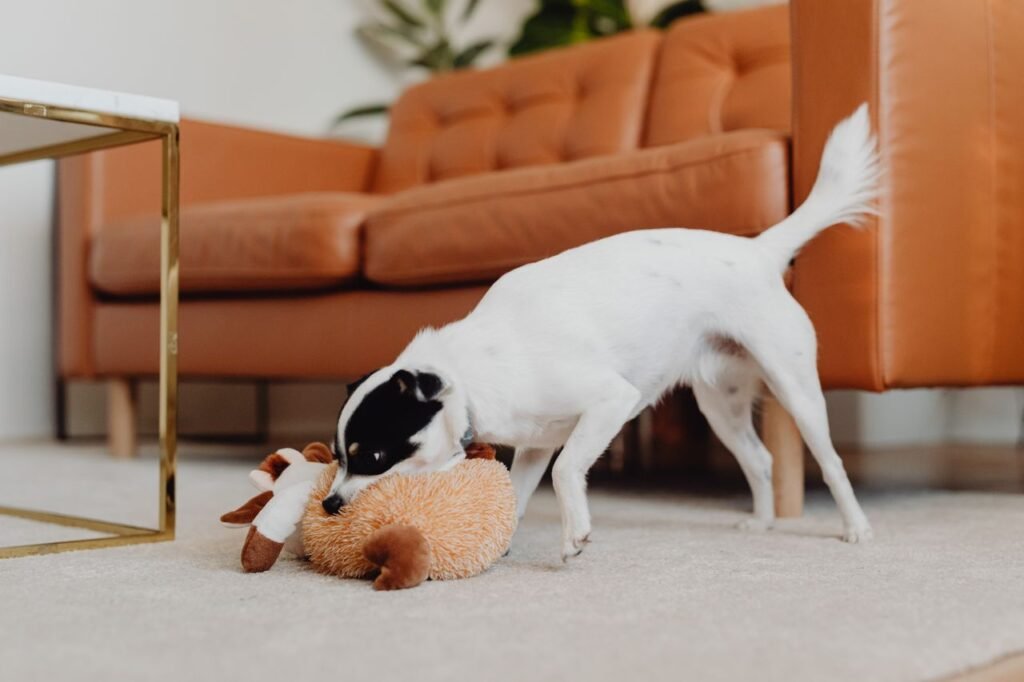
A lot of agency comes down to fairly ordinary environmental design.
A dog with several comfortable resting places can choose between being close to people, farther away, warmer, cooler, quieter or more exposed. A dog with access to safe chew items or things they enjoy investigating does not need to wait for a person to initiate every activity.
For some dogs, agency might include access to a secure outdoor space. For another, it could mean being able to move away from the front window, retreat from visitors or settle in a quieter room when the household is busy.
This connects closely with enrichment at Belle & Bark. I’m less interested in keeping dogs constantly occupied than in creating varied, meaningful opportunities to do things that suit the individual dog.
Letting dogs say “not right now”
Agency also matters in interactions with us.
A dog turning their head away, stepping back or leaving is giving us information. Where possible, allowing them to disengage can reduce the need for stronger communication and gives us a chance to adjust what we are doing.
Training sessions are an easy place to practise this. If a dog wanders away from a low-stakes training game, we don’t always need to immediately call them back. Their decision to leave is useful feedback about the session. We may have made the task too difficult or confusing, chosen an environment that asks too much of them, trained for too long, or simply failed to make the activity enjoyable enough to compete with everything else they could be doing.
Rather than treating disengagement as something the dog needs to correct, it’s an opportunity to look at what we’re asking and adjust. That might mean making the task easier, changing the environment, improving our reinforcement or accepting that this simply isn’t a good time to train.
The same principle is especially useful in cooperative care, where dogs can learn behaviours that indicate readiness to participate and, when possible, request a pause.
Walks are a great place to give some control back
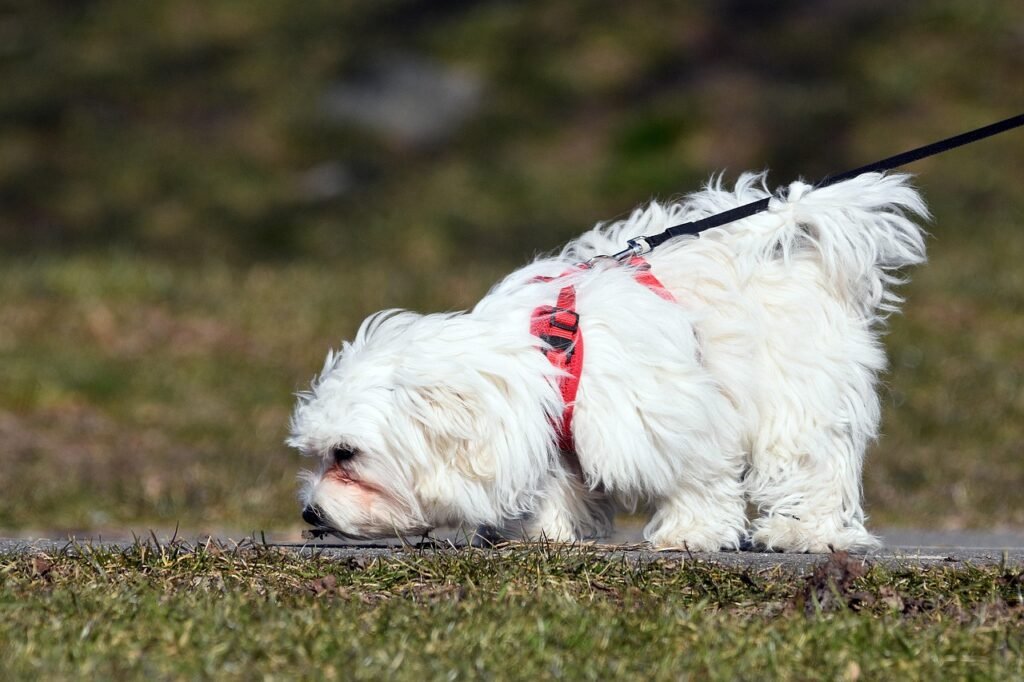
Walks are one of the easiest places to hand some of the decision-making back to dogs. Most walks are for them, after all.
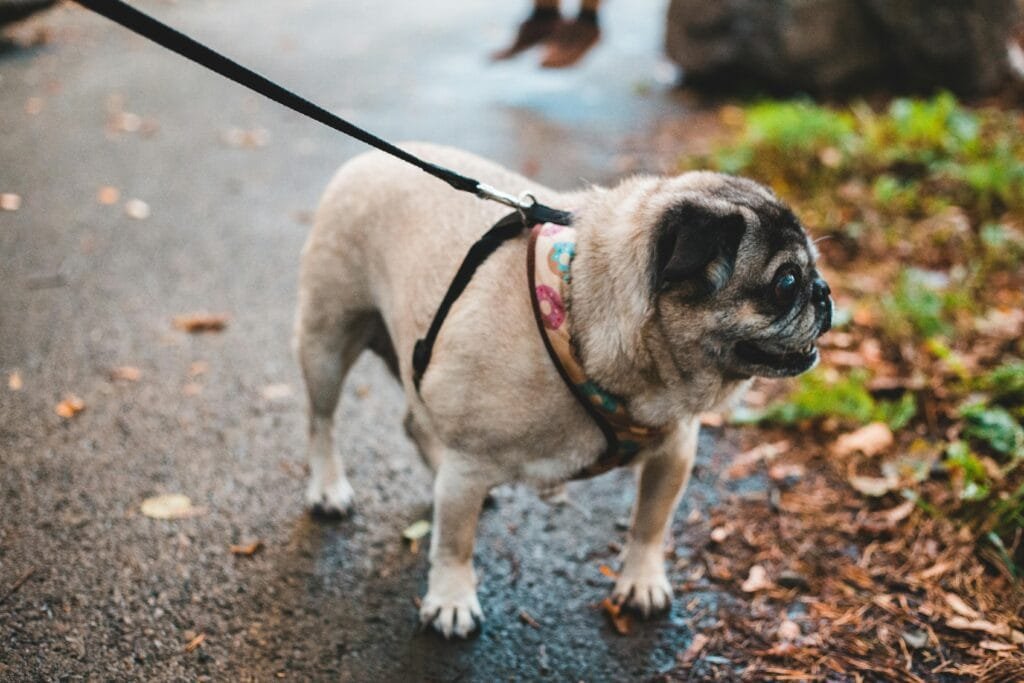
When the environment allows, dogs can choose direction, pace, where to sniff, what to investigate and how long to spend exploring something interesting. A walk does not always need to be a human-planned route completed at a human pace.
Their choices can also give us information. A dog who repeatedly avoids a particular street, lingers in one area, chooses quieter routes or seeks more distance from something in the environment may be showing us something about comfort, preference or emotional state.
A dog-led walk can be slower and considerably less efficient from a human perspective. There may be a five-minute investigation of one particularly excellent shrub. Efficiency, fortunately, is rarely the point of a dog walk.
Choice has to matter to the dog
Giving a dog options is only useful if those options have meaning for them. We can offer what looks like a wonderful choice from a human perspective and discover that the dog does not care about either option.
Meaningful choice starts with observation. Preferences are often much more specific than broad categories such as “likes walks” or “likes people.” A dog may enjoy sniffing but prefer woodland trails to busy sidewalks. They may like resting near their family while choosing a quiet room when visitors arrive. Another may be highly social with familiar people and have little interest in greeting strangers.
The goal is not to offer the maximum number of choices. It is to create opportunities that matter to this dog, then notice what they actually do with them.
Over time, those choices can tell us a great deal about interests, comfort, motivation and priorities. They can also change. A dog recovering from illness may choose different activities than they did six months earlier, while a puppy may become more exploratory as they mature.
Agency gives us more than choice for choice’s sake. It gives the individual dog more room to show us who they are.
A life that isn’t one long training session
Training has a useful place in a dog’s life. We need ways to communicate, teach skills and help dogs navigate a world built for humans. But training should be a relatively small part of the day.
Dogs also need time when nobody is asking them to perform anything: time to sniff, rest, watch, explore, chew, investigate, play, move around and make decisions for their own reasons. Not every sniff needs to become a recall opportunity, and not every quiet moment needs to become a settle exercise.
Thinking about agency can change the way we arrange daily life. Instead of looking for ways to turn every activity into a training opportunity, we can reserve training for the places where it is genuinely useful and let much of the rest of life simply belong to the dog.
A recall may be important for safety. A cue to move off the sofa can be genuinely useful. But there is rarely a good reason to decide which patch of grass a dog sniffs, exactly how they explore a safe trail, which comfortable bed they sleep on or how quickly they finish investigating an interesting smell.
The balance I’m interested in is teaching the skills dogs need to live with us while leaving as much of the rest of their life available for them to actually live.
What your dog’s choices can tell you
Creating more opportunities for agency also gives us more opportunities to observe.
Patterns of choice can reveal preferences that are easy to miss when we direct most of the day ourselves. A dog may consistently settle in one room at a certain time, gravitate toward particular kinds of terrain outdoors, seek contact in some situations and create distance in others.
Changes in those patterns can matter too. Reluctance to climb stairs, jump into a car, explore a familiar environment or participate in a previously enjoyed activity may be worth investigating rather than treating as stubbornness or lack of motivation.
Agency can therefore support welfare while also giving us a clearer view of the individual dog living within the environment we have created for them.
How much do we really need to control?
Living with dogs involves making decisions for them. Some are unavoidable and some are part of responsible care.
But because we control so much of their world, it is worth examining that control rather than taking it for granted. Where is our control necessary, and where is it simply habitual?
Companion dogs may live in warm homes, sleep on comfortable beds and be deeply loved, but their lives are still extraordinarily managed by another species. Even something as basic as going outside to potty usually depends on us opening the door or attaching the leash.
That deserves more thought than it often gets.
Creating more agency means using the control we have thoughtfully and giving some of it back wherever we reasonably can. A walk can unfold at the dog’s pace. An interesting smell can take as long as it takes. The home can offer opportunities that do not depend on the dog waiting for permission, a cue or a scheduled activity.
Sometimes we actively offer a choice. Sometimes we listen when a dog says no. Often the biggest change is simply arranging life so the dog has more opportunities to act for their own reasons.
That broader view of agency fits closely with how I approach dog behaviour and welfare at Belle & Bark: understand the individual dog, pay attention to their experience and make room for more of their life to belong to them.
Frequently asked questions
What does agency mean for dogs?
Agency is the ability to act on the environment and influence what happens. For dogs, that can include making meaningful choices, moving toward or away from things, selecting activities and having their behaviour change an outcome.
How can I give my dog more agency at home?
Look for opportunities that can exist without you having to initiate them. Multiple comfortable resting places, access to quieter areas, safe things to investigate or manipulate, and activities your dog genuinely enjoys can all give them more room to make decisions during the day.
What makes a choice meaningful to a dog?
A meaningful choice involves options the dog actually values. Observation is the best guide. What they repeatedly seek out, return to, avoid or choose when several possibilities are available tells us far more than what we assume they should enjoy.
Can dogs have agency during training?
Yes. Dogs can influence outcomes through their behaviour, choose whether to participate in some activities and sometimes indicate that they need a break. Training is only a small part of agency, though. Many of the most valuable opportunities happen during the rest of a dog’s day.
Why does agency matter for dog welfare?
Having opportunities to make meaningful choices and influence the environment can contribute to positive welfare. Agency also gives dogs more opportunities to engage in behaviours they value and gives us a better view of their preferences, comfort and emotional experience.

Tabitha Turton
Tabitha Turton is the founder and trainer at Belle & Bark, offering dog training and behaviour support in Montreal. Her work draws on current behaviour and welfare science, positive reinforcement and Family Dog Mediation, with a focus on understanding the individual dog and the factors shaping their behaviour.
Her writing explores dog behaviour, learning and welfare, translating research and professional education into practical ideas for everyday life with dogs.