Dominance in dog training: Why the alpha myth is harmful
If you’ve ever been told that your dog is trying to dominate you, needs to know who’s boss, or will “take over” if you aren’t firm enough, you’ve encountered a version of dominance theory.
There is a real behavioural concept underneath some of that language. Dominance can describe a social relationship between individuals, especially where one consistently yields to another in certain interactions. But that is very different from assuming that your dog’s pulling, growling, jumping on the sofa or ignoring a cue is an attempt to establish social rank over you.
That distinction matters because the way we explain behaviour influences what we do about it.
Quick takeaways
- Dominance is real, but it doesn’t explain every dog behaviour.
- Wild wolf packs are usually family groups, not constant rank battles.
- Growling, guarding, pulling and ignoring cues need context.
- Good leadership can combine clear expectations with emotional responsiveness.
- Training choices affect welfare and the relationship we build with dogs.
What does dominance actually mean?
In behavioural science, dominance is generally used to describe a relationship between individuals, rather than a fixed personality trait. In an established relationship, one animal may reliably defer to another in particular social interactions.
Research on groups of domestic dogs has found measurable dominance relationships, with submissive behaviours providing some of the clearest information about relative status. That doesn’t make dominance a useful explanation for every disagreement, training problem or dog-human interaction.
The distinction tends to disappear in popular dog-training advice. “Dominant” may be used to explain walking through a doorway first, sleeping on furniture, pulling on leash, guarding food or not responding to a cue. Once all of those behaviours are interpreted as attempts to gain status, we risk overlooking much more useful information about why the behaviour is happening.
Where did the alpha dog idea come from?
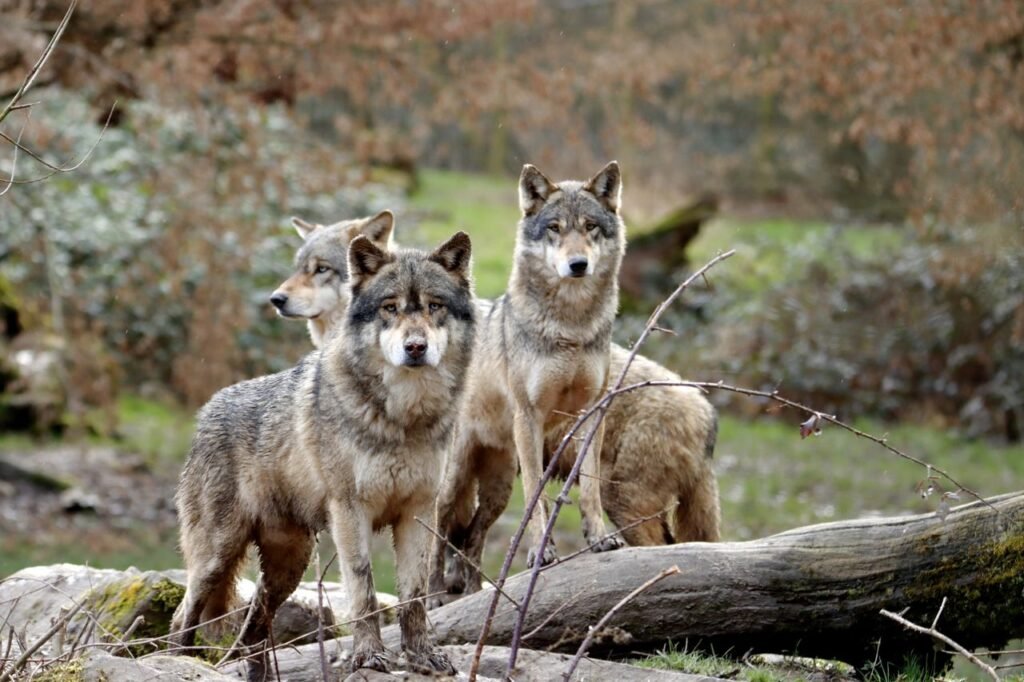
Much of the familiar alpha narrative grew out of observations of wolves living in captivity. These groups could include unrelated animals placed together under artificial conditions, where competition and conflict were much more obvious than they typically are within a naturally formed wolf family.
Long-term field research gave researchers a different view of wolf social life. In his influential paper Alpha status, dominance, and division of labor in wolf packs, wolf biologist L. David Mech described wild packs as primarily family groups made up of breeding parents and their offspring. The adults guide much of the group’s activity because they are the parents, and pack life involves extensive cooperation in activities such as travel, hunting, territorial defence and raising young.
Dominance still exists within wolf social relationships, but Mech’s observations also illustrate why the popular image of animals constantly fighting for the top position is misleading. In an established family group, status can often be expressed through deference and submission rather than continual aggression. The higher-ranking animal does not need to repeatedly prove its status by fighting for every resource.
That is a very different picture from the idea that a companion dog needs a human “alpha” who continually demonstrates control.
Dogs are not wolves living in our homes
Dogs and wolves share evolutionary history, but domestication has shaped dogs into animals with their own social ecology and a remarkable ability to form relationships with humans.
Even among dogs, social relationships can vary between individuals and groups. Studies have documented stable rank relationships in groups of dogs, but that does not tell us that a dog-human household operates like a wolf pack or that everyday dog behaviour is organized around attempts to outrank people.
Dogs also form attachment relationships with the humans they live with. That gives us another, often more useful, way of thinking about the relationship than imagining ourselves as competitors for rank.
So when a dog growls over a chew, pulls toward another dog, jumps on a visitor or stays on the sofa when asked to move, “they’re trying to dominate me” is not much of an explanation.
A dog guarding a chew may be worried about losing access to something valuable. Pulling may have been reinforced repeatedly by reaching interesting smells or places. Jumping may have a long history of producing social interaction. A dog who doesn’t respond to a familiar cue might be distracted, worried, physically uncomfortable, insufficiently prepared for that environment or simply more motivated by something else in that moment.
The useful question is what is shaping this behaviour in this dog.
What about resource guarding?
Resource guarding is particularly easy to confuse with dominance because both can involve access to something an animal values. They are not the same thing.
In established dominance relationships, social status can be communicated through submission and deference without the higher-ranking animal needing to threaten or fight for every resource. Research in dogs similarly suggests that submissive signals can tell us more about relative status than aggression alone.
A dog who stiffens, growls, snaps or moves away when someone approaches their food or another valued item presents a different question. We need to look at the individual dog, the resource, their learning history, the context and what they expect will happen when someone approaches.
Fear, anxiety or concern about losing access to something valuable may be part of that picture for some dogs, but resource guarding is not best understood by assuming either that the dog is trying to dominate the person or that every case has a single emotional cause.
Trying to “win” by repeatedly taking food away, physically confronting the dog or forcing them to surrender something can add conflict to an already sensitive situation. If guarding is frequent, intense or creates a bite risk, a behaviour assessment can help identify the patterns involved and develop a safer plan.
When dominance becomes the wrong explanation
The practical problem with dominance theory isn’t simply that a term has been stretched beyond its usefulness. It can change how we respond to dogs.
If we believe a dog is deliberately challenging our authority, confrontation can start to seem necessary. Advice based on this idea has included pinning dogs onto their backs in an “alpha roll,” physically forcing them out of spaces, intimidating them around food, leash corrections, or repeatedly provoking conflict so the person can demonstrate that they are in charge.
Those interactions can introduce fear, frustration and defensive behaviour without necessarily teaching the dog what we would like them to do instead.
Training methods also have welfare consequences. In a study of companion dogs attending training schools, dogs exposed to more aversive training methods showed more stress-related behaviours during training, greater increases in cortisol in the groups using more aversives, and poorer outcomes on a cognitive-bias measure in the group trained primarily with aversive methods.
That doesn’t mean an unpleasant consequence is incapable of changing behaviour. It can. The more important questions are what else the dog may be learning, what emotional and welfare costs accompany the method, and whether we can reach the same practical goal without deliberately creating fear, pain or intimidation.
What good leadership can look like
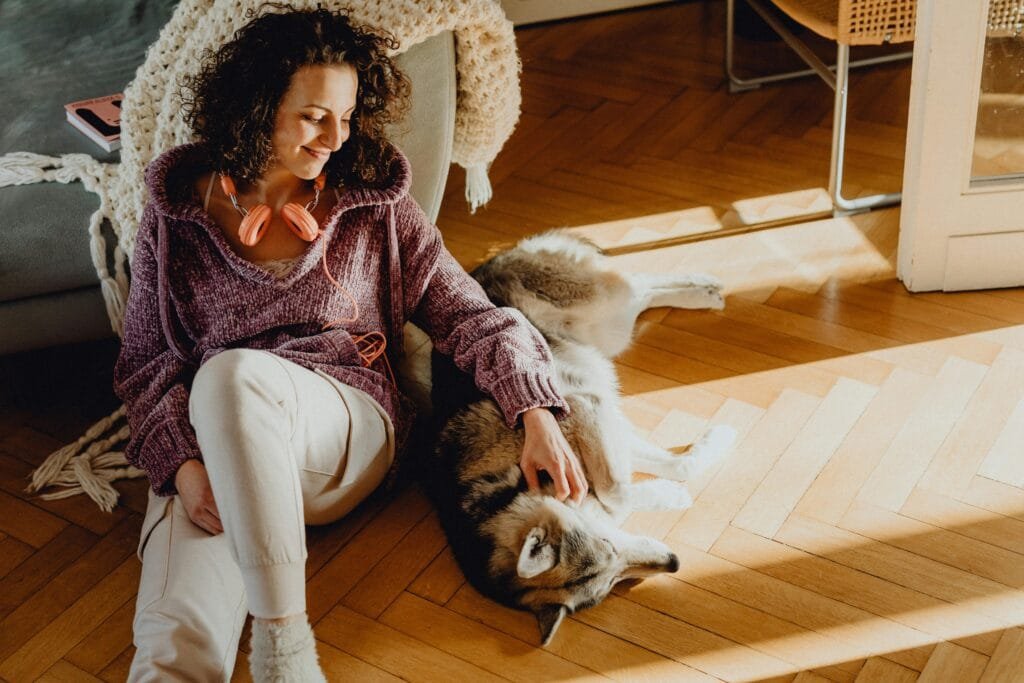
Dogs benefit from guidance, predictability and clear expectations. They live in a world largely designed and controlled by humans, so part of our responsibility is helping them understand what works in that world while paying attention to how they’re experiencing it.
For me, good leadership looks less like establishing rank and more like setting the dog up to understand what is expected. That can mean teaching useful skills, creating predictable routines, preventing situations the dog isn’t ready to handle, setting reasonable boundaries and responding when the dog communicates that something is difficult.
Emerging research into dog-directed parenting styles gives us an interesting way to think about this. Researchers have adapted concepts from human parenting research to examine how guardians differ in both the expectations they place on dogs and how responsive they are to them.
In one study, dogs whose guardians were categorized as authoritative — relatively high in both expectations and responsiveness — had the highest rate of secure attachment in the sample and also differed on social and problem-solving tasks compared with dogs whose guardians were categorized as authoritarian or permissive.
This is still a developing area of research, so I wouldn’t treat authoritative dog parenting as a formula or assume it causes particular outcomes in every dog. What I find valuable is the broader idea it illustrates: clear expectations and emotional responsiveness are not opposites.
You can provide structure while paying attention to how your dog is coping emotionally. You can set boundaries while teaching them what to do instead, and make decisions for safety while still giving them meaningful choices where those choices are possible.
The relationship matters too
I’m not only interested in whether I can make a behaviour happen. I also care about what the dog learns about me while we’re working together and how they experience our interactions.
If I regularly become the source of pain, fear or unpredictable confrontation when a dog makes a mistake, that becomes part of their learning history with me. If I’m predictable, notice their communication, help them succeed and reinforce behaviours I want to see again, those experiences become part of the relationship too.
That is one of the reasons Belle & Bark uses positive reinforcement and does not deliberately use pain, fear or intimidation as teaching tools. The welfare research matters, but so does the kind of relationship I want to have with dogs and the kind of person I want them to experience me as.
I’ve written more about that in Training with heart and science: What we believe.
Guidance in everyday life
Good guidance is often fairly ordinary.
It can mean putting food away before a dog who counter-surfs enters the kitchen, then teaching them what works instead. It might mean creating more distance from another dog before asking for attention, using a gate so a puppy doesn’t repeatedly practise chasing the cat, or teaching a dog to move off the sofa because there are times when you genuinely need them to move.
Positive reinforcement lets us teach those skills by making the behaviour we want worthwhile to the dog. Clear cues, thoughtful management and predictable routines can make expectations easier to understand without turning everyday interactions into contests over control.
Choice can be part of that relationship too. Dogs can have boundaries while still having meaningful opportunities to influence things that affect them. You can read more about that in Dog training and agency: Why choice matters.
Looking at the behaviour in front of you
The biggest limitation of dominance theory may be that it gives us an answer before we’ve asked enough questions.
If a dog growls, we can look at what was happening around them, how their body language changed and what happened after the growl. If they guard something, we can investigate what they value, what they anticipate when someone approaches and how previous interactions around resources may have shaped their response. If they struggle to respond to a cue outdoors, we can consider training history, distraction, motivation, physical comfort and emotional state.
Those questions give us information we can actually use.
Calling a dog dominant may feel explanatory, but it can flatten very different behaviours into one story about status. Looking at the individual dog leaves us with more possibilities, but it also gives us a much better chance of understanding what they need and deciding what to do next.
Frequently asked questions
Is the alpha dog theory true?
Not in the way it is commonly used in dog training. Wild wolf packs are usually family groups centred around breeding parents and their offspring, rather than collections of unrelated animals constantly competing to become alpha.
Dominance itself is a legitimate behavioural concept, but that is very different from assuming that ordinary companion-dog behaviour reflects an attempt to outrank humans.
Is dominance real in dogs?
Yes. Researchers have documented dominance relationships among dogs, including relatively stable patterns of submission and status between individuals. Dominance describes a relationship, however, rather than a universal personality type or an explanation for everything a dog does.
Do dogs try to dominate their guardians?
There is not good evidence that companion dogs generally organize their relationships with humans around a dog-style dominance hierarchy. Dogs can compete over resources, learn behaviours that successfully get them things they value, resist handling or become involved in conflict with people, but those situations need to be understood in their individual context.
Do dogs need a pack leader?
Dogs benefit from guidance, predictability and clear expectations, but that does not require acting like an “alpha wolf.” Humans already make many important decisions about a dog’s life. Good leadership can mean using that responsibility thoughtfully, teaching useful skills and paying attention to the dog’s emotional experience.
Are alpha rolls a good way to correct behaviour?
Physically forcing a dog onto their back is unnecessary for establishing a healthy relationship and can create confrontation, particularly when the dog is already frightened, frustrated or defensive. It is more useful to identify what is influencing the behaviour, manage the situation safely and teach the dog what you would like them to do instead.

Tabitha Turton
Tabitha Turton is the founder and trainer at Belle & Bark, offering dog training and behaviour support in Montreal. Her work draws on current behaviour and welfare science, positive reinforcement and Family Dog Mediation, with a focus on understanding the individual dog and the factors shaping their behaviour.
Her writing explores dog behaviour, learning and welfare, translating research and professional education into practical ideas for everyday life with dogs.