Cooperative care for dogs: What it is and how to get started
Nail trims, ear cleaning, brushing, eye drops and vet exams are all ordinary parts of life with dogs, but they can be difficult for dogs who are sensitive to handling or unsure about what is happening. Cooperative care gives us ways to make these experiences more predictable and easier to understand.
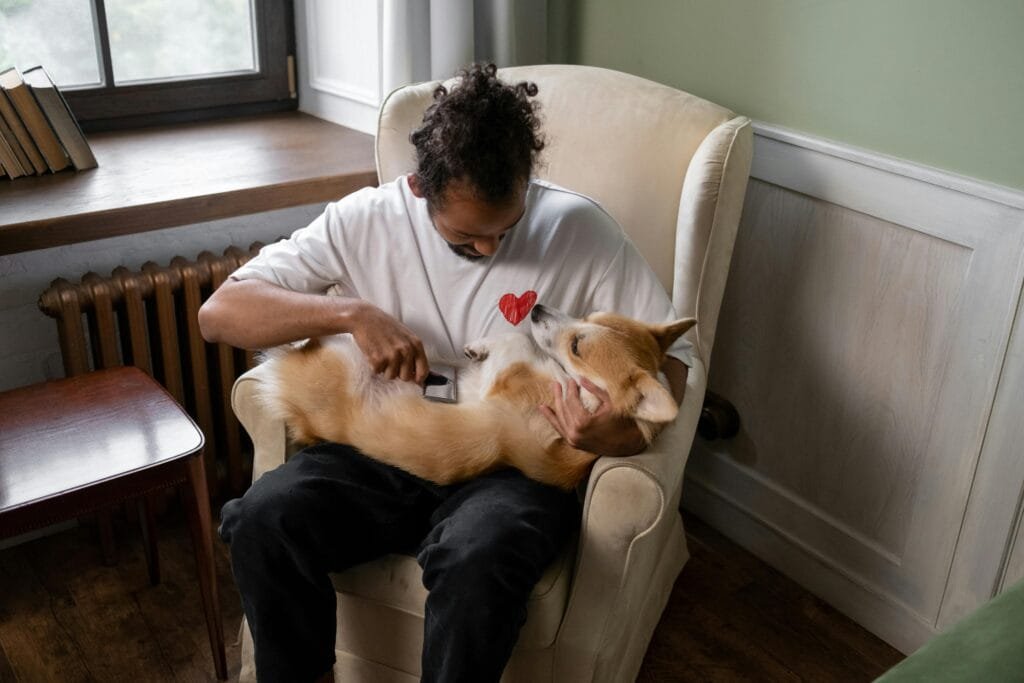
At its simplest, cooperative care means teaching dogs how to participate in grooming, veterinary care and everyday handling. It can involve trained behaviours like a chin rest or standing on a mat, but it can also include much simpler habits: telling your dog what you’re about to do, giving them time to investigate an object, watching their body language, and pausing when they are struggling.
For puppies, these skills can help build good habits early. For dogs who already dislike handling, they can provide a gentler way to work towards necessary care.
Quick takeaways
- Cooperative care helps dogs participate in grooming, veterinary care and everyday handling.
- Start with small, manageable steps and build gradually.
- Give your dog opportunities to pause, move away or investigate what is happening when possible.
- Talking your dog through care can make routines more predictable.
- Cooperative care can be very simple and does not require formal start-button behaviours.
- Necessary care sometimes cannot wait, so the aim is to reduce unnecessary stress and give dogs as much preparation and choice as the situation allows.
What is cooperative care for dogs?
Cooperative care is training that helps dogs participate in grooming, veterinary care and everyday handling. A dog might learn to rest their chin in your hand while you examine an ear, stand comfortably while you touch their paws, place their head through a muzzle, or remain in position while being brushed.
These behaviours can make procedures more predictable and give us clearer information about how the dog is coping. Cooperative care also encourages us to pay attention to pauses, hesitation and other changes in body language instead of focusing only on completing the task.
The overall goal is to make care easier to understand and give dogs as much choice and control as the situation reasonably allows.
What does cooperative care actually look like?
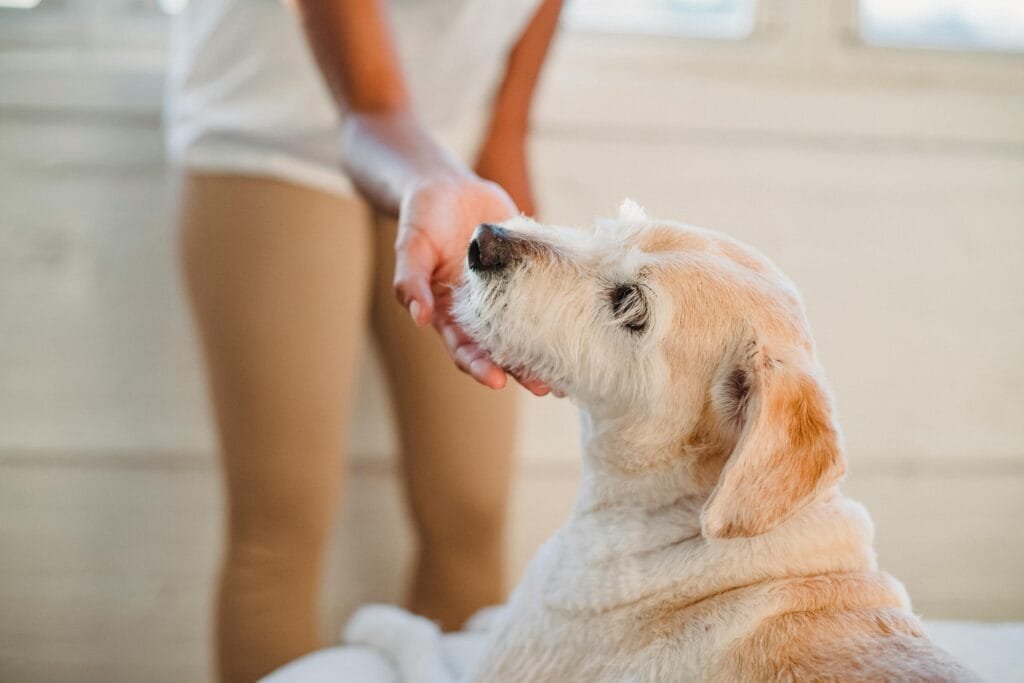
A chin rest is one common example. You can teach your dog to place their chin in your hand or on a towel, then gradually introduce a small amount of handling while they remain in that position.
If your dog lifts their head away, you can pause. This is sometimes called a start-button behaviour, because the dog’s position helps signal when they are ready to continue.
Start buttons can be useful, but they are only one part of the picture. Dogs stretch, sniff, get distracted and shift position for many reasons, so we still need to look at their whole body and the context around the behaviour.
For some dogs and families, formal start-button training works beautifully. For others, cooperative care may be much more informal and still very useful.
Why does cooperative care matter?
Most dogs will eventually need their nails trimmed, ears checked, teeth examined, coat brushed, medication given or some form of veterinary care. Handling can become stressful when dogs do not understand what is happening or when previous experiences have been uncomfortable.
Small, gradual practice sessions can help dogs become more familiar with these routines and give us more options for how we approach them. Research on veterinary handling also suggests that handling style can influence behavioural and physiological signs of stress in dogs. One study found that dogs receiving adaptive, collaborative handling showed greater reductions in some stress measures across repeated visits than dogs receiving standard handling.
That does not make every procedure easy, but it reinforces an important point: the way we handle dogs matters.
You don’t need to wait until your dog has a problem
Cooperative care is useful long before a dog starts avoiding the brush or hiding when the nail clippers appear. Puppies can begin learning about handling in very small doses as part of everyday life.
You might briefly touch a paw and reward, look inside an ear, lift a lip for a second, practise stepping onto a scale, or let your puppy put their nose into a muzzle voluntarily. Short, easy sessions are usually more useful than lots of repeated handling.
Pay attention to your puppy’s body language and keep the experience manageable. The aim is to build familiarity and positive expectations over time.
How to practise cooperative care
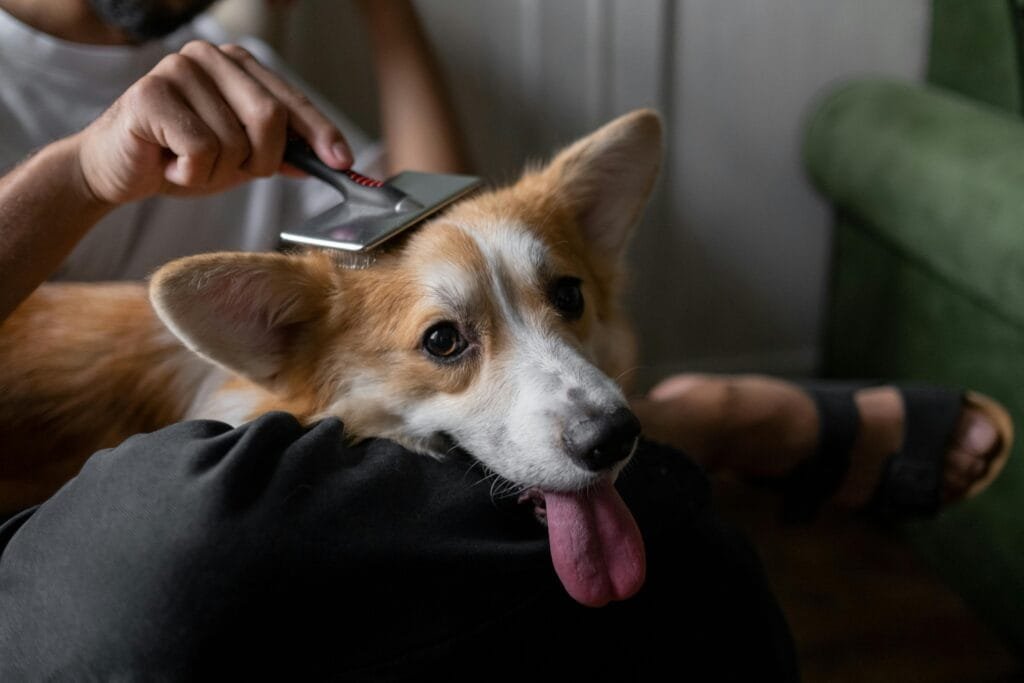
Start with something your dog can already manage. If nail trims are a major struggle, your first step might simply be seeing the clippers, having a paw touched for half a second, or practising a comfortable handling position away from nail care altogether.
Build from there in small steps. Reward behaviours you want to see again, keep the difficulty low enough that your dog can stay engaged, and adjust when you see signs that the exercise is getting harder.
You may hear terms like desensitization, counter-conditioning and shaping in cooperative care. In practical terms, these often involve introducing something gradually, pairing it with good outcomes, and rewarding small pieces of the behaviour you eventually want.
The important part is keeping the pace manageable for the individual dog.
Make care more understandable
Some of the easiest cooperative-care habits require very little formal training.
One thing I do with my own dogs is talk them through what I’m doing. If I need to check a paw, clean something, remove a bandage or inspect an area, I’ll tell them what is about to happen, ask for a little patience, and let them know when we are finished.
Dogs do not need to understand every word for this to be useful. They are very good at learning familiar routines, phrases and sequences. Repeating the same calm language can help make what happens next more predictable.
I also like to give dogs opportunities to investigate care-related items when it is safe. They might sniff the nail clippers, examine a bandage before it goes on, or investigate something that has just been removed from their body. This gives them more information about the process and can make strange objects feel less mysterious.
For many families, these habits are an easier place to start than teaching a formal chin rest, and they fit naturally into everyday care.
Watch the dog, not just the task
It is easy to become focused on finishing the nail, cleaning the ear or getting the harness on. Your dog’s behaviour gives you information about whether the session is still manageable.
Signs that they may need a pause can include turning away, leaning back, pulling a paw away, becoming very still, lip licking, repeatedly leaving, refusing food they would normally take, or suddenly becoming much more frantic about eating.
One signal by itself does not tell us everything. Look at the pattern, the context and any change from your dog’s usual behaviour.
If they are becoming increasingly uncomfortable, making the exercise easier is often the most useful next step.
The Bucket Game
The Bucket Game, developed by Chirag Patel, is a well-known cooperative-care exercise. The dog learns to focus on a container, or “bucket,” while handling takes place. Their engagement helps guide the interaction, and handling pauses when they disengage.
The exercise is useful because it encourages us to notice the dog’s participation and build predictable pauses into care. It can be adapted to many types of handling, although it is only one of many ways to practise cooperative care.
Muzzle training
A muzzle is another piece of equipment that benefits from preparation. Dogs can learn to put their own nose into a basket muzzle and gradually become comfortable wearing it for longer periods.
Introducing a muzzle this way makes it familiar before it is needed during a stressful or painful situation. Muzzle training can be useful even for dogs who have never bitten, because pain, injury and fear can change how any dog responds to handling.
A comfortably trained basket muzzle is a useful life skill and can make difficult care safer for everyone involved.
What if your dog already struggles with handling?
Start by identifying which part of the experience is difficult. A dog who struggles with nail trims may be reacting to paw handling, the sound of the clippers, restraint, the surface they are standing on, a previous frightening experience, or pain.
Pain and medical issues should always be considered when handling behaviour changes, especially if the reaction is new or getting worse.
Once you have a clearer idea of what is difficult, you can break the problem into smaller pieces. A dog who runs when the clippers appear may need to work on seeing the clippers comfortably before you even think about touching a nail.
Growling, snapping, freezing or trying to escape are important information. They tell us the dog is struggling with the situation and that the plan needs to change.
What if the care can’t wait?
Sometimes care is urgent. A dog may need medication, wound care, emergency treatment or another procedure that cannot be delayed while you spend several weeks practising at home.
In those situations, the priority is getting necessary care done as safely and compassionately as possible. Your veterinarian may be able to change how a procedure is performed, use medication to reduce fear or anxiety, or recommend sedation when restraint would otherwise become too stressful.
Cooperative care works within the reality of what the dog needs medically. When time and circumstances allow, we can give dogs more preparation, predictability and participation. After an unavoidable or difficult procedure, we can return to training and work on making future care easier.
Start with one small thing
Choose one piece of handling that would make life easier for your dog and begin there. It might be touching a paw comfortably, stepping onto the vet’s scale, putting their nose into a muzzle, or simply staying relaxed while you look at an ear.
Keep the goal small enough that both of you can succeed, and build from there.
Cooperative care is a practical way to make necessary care easier to understand and easier to participate in. Over time, those small habits can make grooming, handling and veterinary care feel much more manageable for both dogs and the people caring for them.
Need help with handling or cooperative care?
If your puppy is just learning about handling, we can build cooperative-care skills into their early training before grooming and veterinary care become difficult.
If your dog already struggles with touch, grooming, nail care or veterinary handling, we can look at what is making the situation hard and build a plan from there.
Belle & Bark offers private puppy training and behaviour support in Montreal using positive reinforcement, careful observation and an approach tailored to the dog in front of us.
Explore Puppy foundations or Behaviour solutions to learn more.

Tabitha Turton
Tabitha Turton is the founder and trainer at Belle & Bark, offering dog training and behaviour support in Montreal. Her work draws on current behaviour and welfare science, positive reinforcement and Family Dog Mediation, with a focus on understanding the individual dog and the factors shaping their behaviour.
Her writing explores dog behaviour, learning and welfare, translating research and professional education into practical ideas for everyday life with dogs.