Luring in dog training: When it helps and when to move on
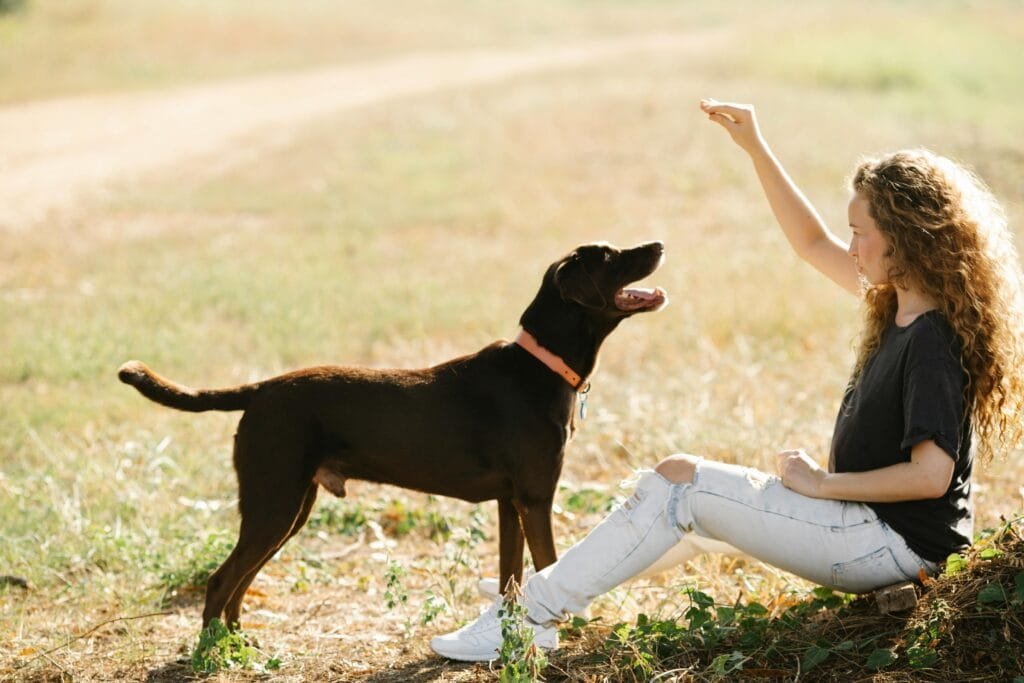
Luring is one of the most common ways people teach dogs new behaviours. Hold a treat near your dog’s nose, move it in the direction you want, and reward when they follow. It can be simple, fast, and genuinely useful for getting an initial movement.
I don’t use luring very often, though. When I can, I’d rather set things up so the dog gets to offer behaviour, notice what works, and earn reinforcement without getting too frustrated. That usually means a lot of shaping, capturing, and keeping my criteria realistic enough that the dog can stay in the game.
Luring still has a place in the toolbox. The trick is knowing when it helps, when another approach might suit the behaviour better, and when to get the food out of your hand so it doesn’t become part of the cue.
Quick takeaways
- Luring uses food or another target to guide a dog through a movement.
- It can be useful for teaching some behaviours quickly.
- Problems usually arise when the lure stays in the picture for too long.
- Shaping gives the dog more opportunity to offer behaviour and work out what earns reinforcement.
- Capturing lets you reinforce behaviour the dog is already offering naturally.
- The best method depends on the behaviour, the dog, and the quality of behaviour you want to build.
What is luring in dog training?
A lure is something your dog follows to produce a movement or position. Food is the classic example. You might hold a treat near your dog’s nose and move it upwards and slightly back so they shift into a sit, or guide it down towards the floor to encourage a down.
Once your dog reaches the position, you reinforce the behaviour. Luring can work well because it gives them a pretty clear route to the answer, especially when the movement is simple and easy for them to follow.
The important part is treating the lure as temporary.
Lure, reward, and bribe
These words often get muddled together, but they’re doing different jobs.
A lure appears before or during the behaviour and helps guide your dog into it. A reward or reinforcer comes after the behaviour and helps make that behaviour more likely to happen again.
A bribe is usually what people mean when they say, “My dog will only do it if I show them the treat first.” At that point, the dog may know the behaviour perfectly well, but visible food has become part of the picture they expect.
That’s usually a sign the lure hung around longer than it needed to.
Is luring bad for dog training?
No. Luring is a perfectly valid training technique, and the research doesn’t support a simple hierarchy where shaping is always better and luring is always worse. A 2020 study comparing shaping and luring found that training method affected how quickly dogs learned a targeting behaviour, without showing that luring simply produces poorer learning overall.
I still use it selectively because the different methods give the dog different kinds of information. With luring, I’m giving the dog a fairly direct route to the answer. With shaping, I’m setting criteria and reinforcing small steps while the dog works out what pays. With capturing, I’m waiting for a behaviour the dog already offers naturally and reinforcing it when it happens.
For me, the useful question is: which approach best fits this dog and this behaviour?
When luring can be useful
Luring can be a good choice when you want to teach a straightforward movement quickly, especially if your dog is comfortable following food and the motion is easy for them.
It can help with an initial sit, spin, position change, or body movement that might take much longer to capture by chance. It can also give a dog a bit more guidance when a very open-ended shaping exercise would leave them confused or frustrated.
Why I often choose shaping or capturing instead
Most of the time, I prefer to create a setup where the dog can offer behaviour and discover what earns reinforcement.
With shaping, I reinforce small, achievable steps towards the final behaviour. The criteria need to be easy enough that the dog keeps succeeding, while still leaving them something to figure out. That problem-solving piece is one of the things I really like about shaping.
Capturing is handy when the dog already offers the behaviour naturally. If I want to build a relaxed down, for example, I may prefer to reinforce a down the dog chooses on their own instead of guiding them into the position with food.
That matters because sometimes I care about more than the final shape of the behaviour. I may want the loose body, slower pace, and overall relaxed quality that was already there when the dog chose to lie down.
Laura VanArendonk Baugh makes a similar practical point in Fired Up, Frantic, and Freaked Out, where relaxation work focuses on reinforcing behaviour that’s already moving in the direction we want. It’s a useful reminder that sometimes the quality of the behaviour matters just as much as whether the dog technically did the thing.
How to fade a food lure
If you do use a lure, fade it early.
Let’s say you’re teaching a sit:
- Hold a treat near your dog’s nose and guide them into the sit.
- After a few successful repetitions, make the same hand movement with an empty hand.
- Mark the sit.
- Deliver the treat from your other hand or treat pouch.
- Gradually make the hand signal smaller as your dog understands the behaviour.
- Add a verbal cue later if you want one.
The food has now shifted from guiding the behaviour to reinforcing it afterwards.
If your dog suddenly stops responding as soon as the food disappears, that’s useful information. The lure has probably become an important part of the cue picture. Make the transition easier and reinforce generously when they respond to the empty-hand signal.
Alternatives to luring
Luring is only one way to teach. Shaping, capturing, targeting, and smart environmental setup can all make the learning process clearer.
Shaping
With shaping, you reinforce progressively closer versions of the behaviour you want.
If you’re teaching your dog to put two paws on a platform, you might first reinforce looking at it, then moving towards it, touching it with one paw, and eventually standing with both front paws on it.
Good shaping should feel like a solvable problem. If your dog is spending most of the session staring at you, wandering off, or throwing out random behaviours without making progress, your criteria may be too hard.
That’s where our skill as trainers matters. We need to make the next step obvious enough that the dog can keep finding success.
Capturing
Capturing means reinforcing a behaviour when your dog offers it naturally.
If your dog lies down beside you while you’re working at your desk, you can quietly mark and reinforce it. Over time, that behaviour may become more likely to happen again.
I especially like capturing for behaviours that already happen in a form I want, such as settling, checking in, stretching, or choosing a mat. It lets me work with what the dog is already doing instead of constructing the behaviour from scratch.
Targeting and environmental setup
Sometimes the easiest way to help a dog succeed is to change the setup.
A hand target can guide movement without holding food directly in front of the dog’s nose. Platforms, mats, barriers, or the placement of objects can make the behaviour easier to discover and cut down on the number of wrong turns.
I use this kind of setup a lot because it gives the dog room to make choices while keeping the problem manageable.
Choosing the right approach for your dog
There’s no prize for using the least guidance possible. Some dogs love shaping and start experimenting almost immediately. Others get frustrated when the criteria aren’t clear enough. Some behaviours happen often enough that capturing is easy, while others may be much quicker to teach with a lure or target.
What I’m aiming for is a learning setup where the dog understands enough to keep making progress. That usually means achievable criteria, plenty of reinforcement, and as much opportunity as possible for the dog to participate in figuring things out.
Luring can absolutely be part of that toolbox. I just don’t reach for it first when shaping, capturing, or a thoughtful setup can give the dog a little more room to think.
Want help making training clearer?
Belle & Bark’s Everyday skills and Puppy foundations programs use positive reinforcement and flexible teaching strategies based on the individual dog, the behaviour being taught, and what helps them learn most comfortably.

Tabitha Turton
Tabitha Turton is the founder and trainer at Belle & Bark, offering dog training and behaviour support in Montreal. Her work draws on current behaviour and welfare science, positive reinforcement and Family Dog Mediation, with a focus on understanding the individual dog and the factors shaping their behaviour.
Her writing explores dog behaviour, learning and welfare, translating research and professional education into practical ideas for everyday life with dogs.