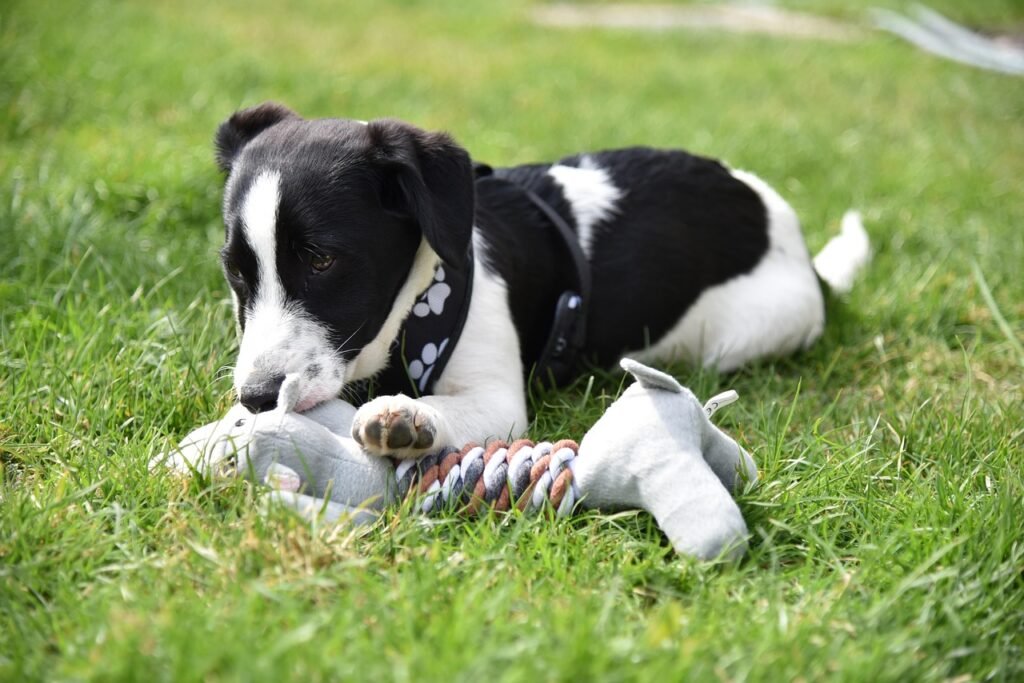
Puppy biting: Why it happens and what to do
Puppies have an impressive ability to turn ordinary household activities into opportunities for biting. You walk across the room and they grab your pant leg, you reach down to pet them and they mouth your hand, or you sit on the sofa and suddenly there’s a puppy hanging from your sleeve.
By evening, the same puppy who was relatively manageable all morning may seem determined to put their teeth on every moving part of you. Puppy biting can be painful, frustrating and surprisingly relentless, and it’s also a very common part of puppyhood.
Understanding why it’s happening can make it much easier to decide what to do next.
Quick takeaways
- Puppy biting, nipping and mouthing are common during puppyhood.
- Biting often gets more intense when puppies are excited, frustrated, overtired or teething.
- Management, rest, appropriate chewing and play outlets, and rewarding calmer choices can all help.
- Redirecting to a toy can be useful, but it won’t solve every biting episode.
- If biting is making daily life difficult, frightening family members, or happening alongside fear, guarding or handling sensitivity, it’s worth getting professional support.
Why do puppies bite so much?
Puppies experience a great deal of the world through their mouths. They pick things up, chew them, carry them and investigate what happens when they interact with them. Mouthing is also especially common in younger dogs and often shows up during play.
Teething adds another layer. As adult teeth begin coming in, chewing can help with uncomfortable gums, which is one reason appropriate things to chew are so useful during this stage.
Biting can also become more intense when a puppy is excited, frustrated or tired. A puppy who has been awake too long, had a busy outing or spent twenty minutes racing around the living room may have a very different capacity for self-control than they did earlier in the day.
That makes the circumstances around the biting worth paying attention to, because they can tell you a lot about what your puppy needs and what may help.
Why does my puppy bite me more than everyone else?
This comes up surprisingly often, especially when one person in the household feels like the puppy has selected them as their favourite chew toy while everyone else seems to escape relatively unscathed.
Movement can be very exciting to puppies. Flowing clothing, slippers, hands moving quickly, someone walking across the room or a child running past can all invite chasing and grabbing.
The way we interact with puppies can play a role too. Animated voices, quick hand movements and physical play may increase excitement, and if grabbing a sleeve reliably leads to movement, talking, pushing, laughing or a game of chase, it can become a very effective way for a puppy to start an interaction.
Looking at what tends to happen immediately before the biting can help you spot those patterns and decide what to change.
What should I do when my puppy bites?
When your puppy starts biting, it helps to look at what they may need in that moment and what was happening immediately beforehand.
Sometimes offering an appropriate toy or chew works beautifully. Keeping toys within easy reach in the places where biting tends to happen can make this much easier than searching for one while a puppy is attached to your trousers.
You can also reinforce the moments when your puppy makes another choice. If they disengage from your hands, pick up their toy, settle beside you or approach without immediately using their teeth, those are useful behaviours to notice and reward.
Management can make daily life much easier while your puppy is learning. Baby gates, pens and thoughtfully arranged spaces can prevent repeated situations where everyone becomes increasingly frustrated, and clothing or footwear can make a difference too if ankles and loose fabric are particularly exciting.
When teeth are already on skin or clothing, aim to make the interaction less exciting rather than turning it into another game. Calmly create some space, offer another activity if your puppy is able to engage with it, and think about what led up to the biting in the first place.
What if redirecting to a toy doesn’t work?
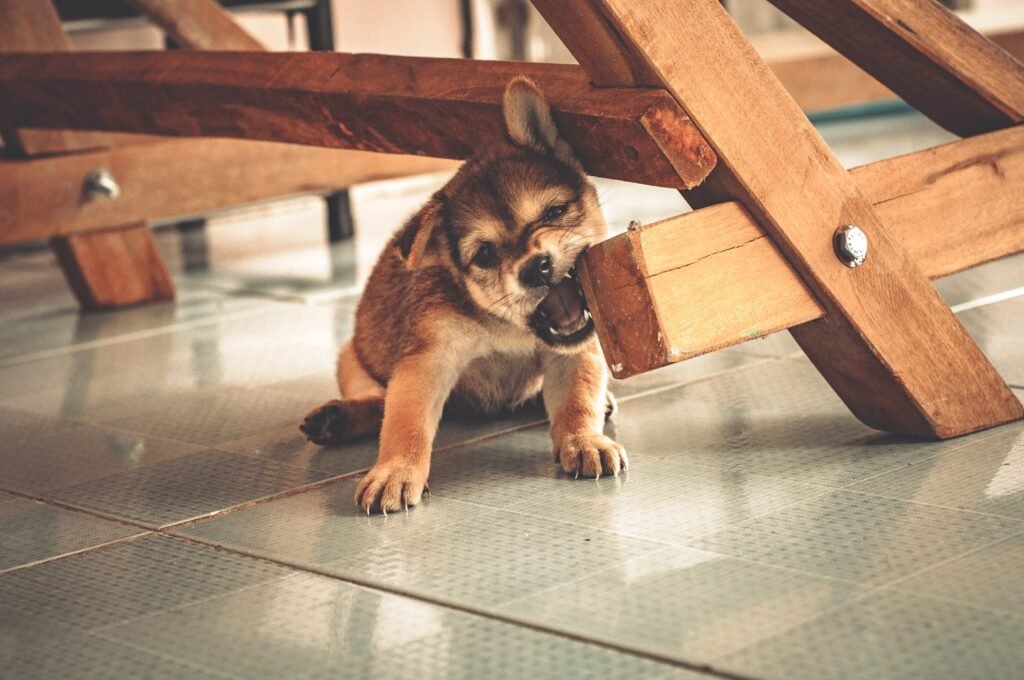
“Give them a toy instead” is common puppy advice, and sometimes it works immediately. Other times, your puppy looks at the toy, looks back at your hand and makes their preference very clear.
At that point, repeatedly presenting toys may not address what’s driving the behaviour. A puppy who is overtired may need sleep, while a puppy who has been confined for a while may need an appropriate opportunity to move and explore.
A highly aroused puppy may benefit from a quieter environment and something soothing to do, and a frustrated puppy may need help with the situation that caused the frustration.
Sniffing, chewing, licking, shredding appropriate items and searching for scattered food can all give puppies useful outlets, depending on the puppy and the situation. Redirecting tends to work best when the alternative actually meets a need your puppy has.
Why does puppy biting get worse in the evening?
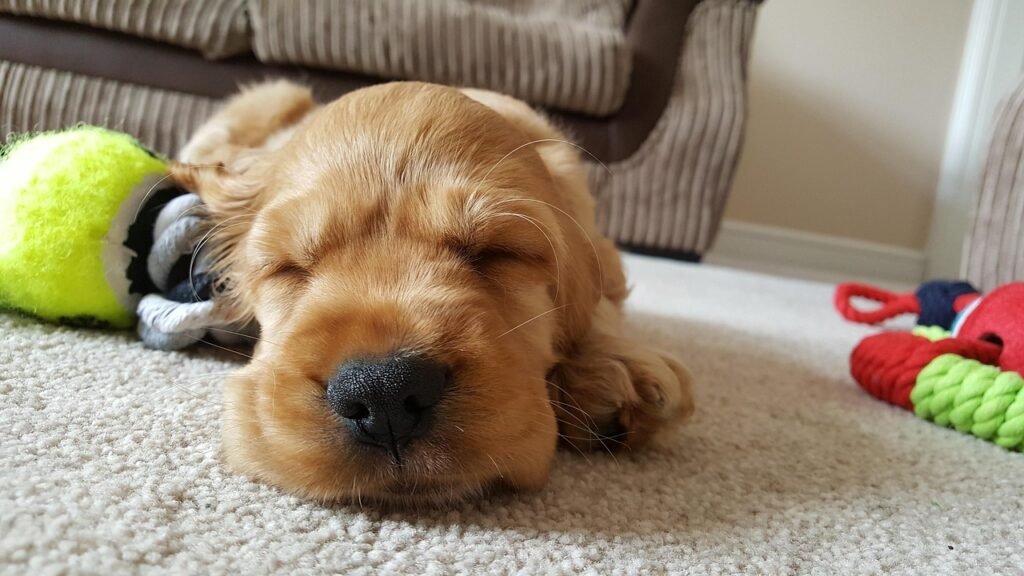
Many puppy guardians notice that biting becomes particularly intense later in the day, especially once tiredness, excitement and a busier household start to overlap.
Evenings often come with a collection of things that can make puppy behaviour harder. People may be returning from work or school, dinner is happening, the household is more active, and the puppy has already accumulated a full day of experiences.
That combination can produce what many families affectionately, or perhaps not so affectionately, call the puppy witching hour.
If you notice a predictable evening pattern, look at the hour or two before it starts. Consider how much your puppy has slept, what they’ve been doing, whether they’ve had opportunities to sniff and chew, and whether the environment becomes particularly exciting at that time of day.
Making an adjustment earlier can be much easier than trying to settle a puppy once they’re already racing around and biting everything they can reach.
How much sleep does a puppy need?
Young puppies sleep a lot, often far more than people expect, because so much of their day is filled with new information and experiences.
A short walk around the block, meeting a visitor or exploring a new environment can involve dozens of unfamiliar sights, smells and sounds. Sleep gives puppies time to recover from all of that.
When puppies have been awake for long periods, you may notice more frantic play, difficulty disengaging, zoomies and increasingly enthusiastic use of teeth.
A comfortable, predictable place to rest can therefore be part of a biting plan too. Watching your individual puppy is more useful than trying to hit an exact number of hours, especially if biting reliably escalates after a certain amount of awake time.
What about puppy biting hands, feet and clothes?
Hands, feet and clothing can be especially exciting to puppies because they move. Feet shuffle across floors, hands reach and pull away, pant legs sway, and robe belts can trail behind people like very tempting tug toys.
If your puppy regularly goes after a particular target, think about ways to make that situation easier while they’re learning.
For a puppy who goes after feet when someone walks across the room, you might scatter a few pieces of food for them to find before you start moving. A puppy who grabs clothing during play may do better with longer toys that keep the game away from hands and sleeves.
You can also practise useful skills at calmer times. Checking in, playing “find it” with a food scatter, moving with you and disengaging from something exciting can all give your puppy other behaviours to use when life becomes interesting.
Is puppy biting normal?
Mouthing, nipping and biting are very common during puppyhood, although what that looks like can vary quite a bit from one puppy to another.
Breed tendencies, play style, temperament, age, sleep, frustration tolerance, previous learning and the puppy’s environment can all influence how much biting you see and when it tends to happen.
That makes comparisons with someone else’s puppy surprisingly unhelpful. Two puppies of the same age can have very different patterns.
It’s more useful to watch your own puppy over time. Are they developing more ways to interact with you? Can they disengage more easily? Are you getting better at predicting when biting is likely to happen? Are the difficult periods becoming easier to manage?
When will my puppy stop biting?
There isn’t a single week when puppies collectively decide they’re finished biting people, because teething, arousal, learning and general development all change gradually.
Many puppies become less mouthy as they mature, and they’re also learning how to interact with people, regulate excitement and choose from a growing repertoire of behaviours.
The experiences they have during puppyhood can support that process. If toys are satisfying to grab, chewing has appropriate outlets, calm interaction is rewarding and people help them when they’re overwhelmed, their options gradually become broader than simply putting their mouth on everything.
Progress can be uneven. A puppy may have several easy days followed by an evening when their inner piranha makes a dramatic return, so looking at the overall pattern over several weeks is usually more useful than judging one difficult day.
When should I get help with puppy biting?
Support can be useful whenever biting is making daily life difficult, whether that means family members are becoming worried about interacting with the puppy, children are struggling to manage the behaviour safely, or the strategies you’ve tried aren’t making things easier.
It’s also worth seeking professional guidance if biting happens in situations involving fear, guarding, handling sensitivity or other behaviour that concerns you.
A trainer can help you look at the whole picture: when the biting happens, what tends to precede it, how everyone responds, what the puppy’s daily routine looks like and which changes are most likely to help.
Helping your puppy learn without making life complicated
Puppy biting usually becomes easier to work with once you start spotting patterns around when it happens, what tends to come before it and what helps your puppy settle or disengage.
Notice when it happens, make useful alternatives easy to access, help your puppy get enough rest and give them appropriate outlets for chewing, playing, sniffing and exploring. Reward the behaviours you’d like to see more often, and use management to make difficult moments easier while those skills are developing.
Gates, pens, chews, toys and changes to the daily routine can all be part of raising a puppy without turning every biting episode into a formal training exercise.
If biting is currently dominating life with your puppy, Belle & Bark’s Puppy Foundations program offers private and small-group puppy training in Montreal, with support tailored to your puppy, household and everyday routines.

Tabitha Turton
Tabitha Turton is the founder and trainer at Belle & Bark, offering dog training and behaviour support in Montreal. Her work draws on current behaviour and welfare science, positive reinforcement and Family Dog Mediation, with a focus on understanding the individual dog and the factors shaping their behaviour.
Her writing explores dog behaviour, learning and welfare, translating research and professional education into practical ideas for everyday life with dogs.