Private puppy training in Montreal
Bringing home a puppy is exciting, and then very quickly you’re discussing poop schedules, nap timing, ankle biting, and whether your puppy has somehow eaten another sock.
Group puppy classes can be a great option. I recommend them often, especially for families who enjoy learning alongside other people and want structured practice around other puppies. Private training suits families who want something more flexible or individualized: sessions in their own home, more time for their particular questions, and a plan that can change as their puppy changes.
Some people love the energy of a group class. Others would happily skip the barking puppies, folding chairs and small talk.
Quick takeaways
- Private puppy training gives you one-on-one coaching tailored to your puppy, household and everyday routines.
- Sessions can address what’s actually happening that week, from biting and housetraining to walking, sleep and socialization.
- Training at home and in your neighbourhood lets you practise skills where you’ll actually use them.
- A well-run group puppy class is a great choice for many families; private training offers more flexibility, personalization and individual support.
- At Belle & Bark, private Puppy Fundamentals is available throughout the year, while small-group puppy classes are offered seasonally.
When private puppy training makes sense
Private training gives us more room to adapt to what’s happening in your home and with your puppy that week.
Your puppy needs more individual attention
Puppies don’t all struggle with the same things at the same time.
One family may be losing sleep over crate comfort. Another may be dealing with constant ankle biting. Someone else may have a puppy who has already figured out toileting but freezes every time they step onto a busy sidewalk.
In a private session, we can spend more time where you actually need it and move quickly through things that are already going well.
Your schedule doesn’t fit a group course
Group classes run at set times and dates. That structure is useful, but it doesn’t always fit work schedules, travel, childcare, or the general chaos of bringing home a puppy.
Private sessions offer more scheduling flexibility, and the training happens in the places you’re already trying to navigate together.
You want more hand-holding
There’s a lot of information online about puppies, and much of it contradicts itself.
Private training gives you room to ask the oddly specific questions that come up once you’re actually living with the dog.
Why does she only bite me?
Is he sleeping enough?
Should I interrupt that?
Was that play getting too intense?
Why will she pee on the balcony but absolutely not on the grass?
Those questions are often more useful than working through a generic list of behaviours every puppy is “supposed” to know.
Training where puppy life actually happens
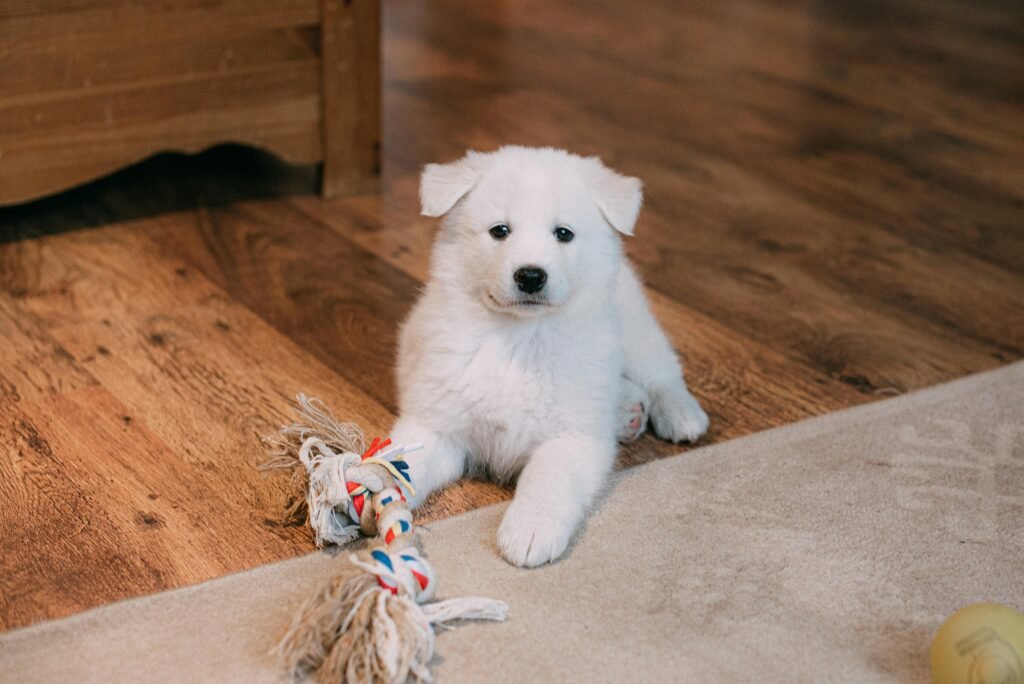
Dogs learn in context, so a skill that works beautifully in one place doesn’t automatically transfer everywhere else.
Your puppy may settle happily on a mat in the living room and then completely forget that skill when someone knocks at the door. They might walk nicely down the hallway and turn into a tiny sled dog the moment you reach the sidewalk.
With private puppy training, we can work in the places where those things are happening: your kitchen, front door, stairs, elevator, backyard, sidewalk or neighbourhood.
That can be particularly useful in Montreal, where puppies may be learning about apartment hallways, shared entrances, traffic, construction noise, cyclists, dogs passing six feet away and an impressive number of discarded chicken bones.
What about socialization?
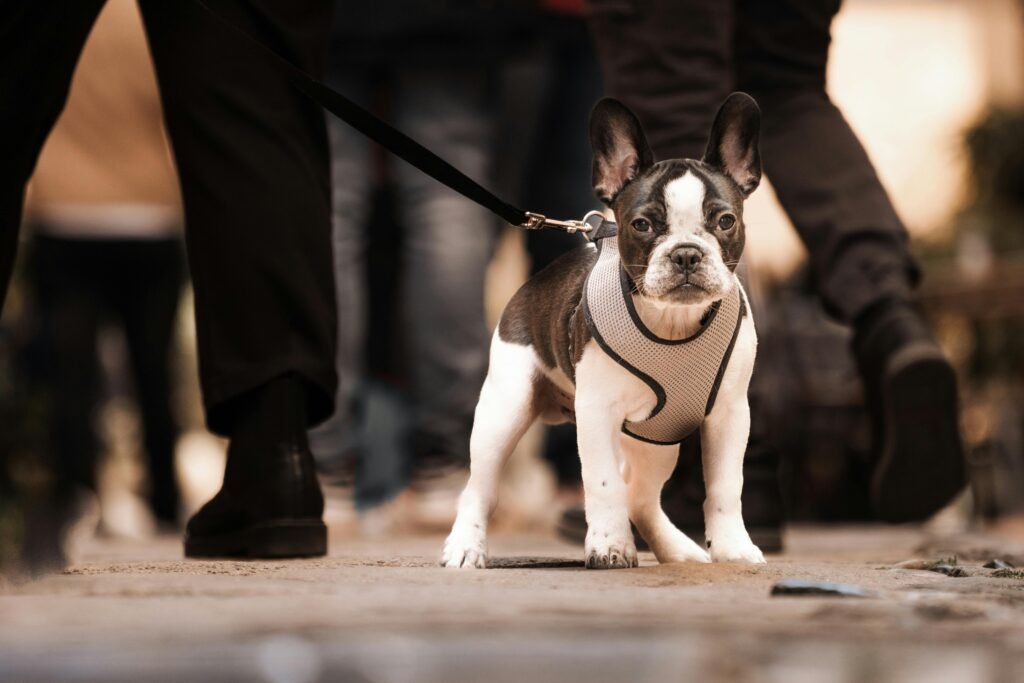
Socialization is a major part of puppy development, and for most puppies, positive experiences with other dogs are an important piece of that.
It’s also broader than dog-dog play. Puppies are learning about people, places, surfaces, sounds, handling, movement, traffic, household routines, new environments and all sorts of things they may encounter as they grow.
Social time with other dogs matters
For many puppies, spending time with other dogs helps meet genuine social needs and gives them opportunities to practise communication, play, pausing, disengaging and re-engaging.
That doesn’t mean every puppy needs to greet every dog they see, and not every interaction will be equally useful.
A good social experience might be an energetic play session with a well-matched puppy, a calmer interaction with a socially skilled adult dog, or simply spending time near other dogs without pressure to interact.
The quality of the experience matters more than the number of greetings.
Socialization isn’t a checklist
I don’t love the idea of rushing puppies through a long list of “must-see” experiences before a certain age.
The goal is to build positive experiences at a pace the puppy can handle.
That means paying attention to body language, giving them room to observe, allowing them to move away when they need to, and avoiding situations where they’re simply flooded with too much novelty at once.
A puppy who is curious and engaged will learn something very different from a puppy who is overwhelmed and just trying to get through the experience.
What private puppy training can cover
In my five-session Puppy Fundamentals program, we build the course around your puppy and your household.
Depending on what’s most useful, we may work on:
- puppy biting and chewing
- housetraining
- crate comfort and sleep
- name recognition and check-ins
- recall foundations
- leash and walking skills
- handling and cooperative care
- socialization and positive exposure
- settling and everyday routines
- enrichment and appropriate outlets
- body language and communication
You also get handouts and homework support between sessions, so you’re not trying to remember everything from a conversation while your puppy is eating your shoelaces.
The goal is to give you a clear plan, then adjust it as your puppy develops.
Private or group puppy training?
There isn’t one format that makes sense for every family.
A group course may be a great fit if you enjoy learning alongside other guardians, want structured practice around puppies, and can attend the scheduled classes.
Private training may suit you better if your schedule is unpredictable, you prefer one-on-one coaching, your puppy needs a quieter setup, or there are specific things happening at home that you want help with.
Some families simply like having more attention and personalization. That’s a perfectly good reason too.
At Belle & Bark, I offer both. Small-group puppy classes run seasonally, while private Puppy Fundamentals sessions are available more consistently throughout the year.
Want more individual support with your puppy?
If you’d like one-on-one help with your puppy at home and in your neighbourhood, you can learn more about Puppy Fundamentals and current availability on the Puppy Foundations page.
Frequently asked questions
Is my puppy too young for private training?
Puppies can start learning as soon as they come home.
Early sessions are usually less about formal training and more about helping everyone settle into daily life: toileting, sleep, biting, handling, communication, routines and positive exposure.
Does my puppy still need to spend time with other dogs?
Yes. For most puppies, appropriate social experiences with other dogs are an important part of development and can help meet genuine social needs.
That doesn’t mean your puppy needs to greet every dog they see. Useful social experiences can include playing with well-matched puppies or adult dogs, spending time around dogs without interacting, and learning how to communicate, pause, disengage and return to play.
The quality of those experiences matters. We want puppies spending time with dogs who are appropriate partners and having interactions they can comfortably participate in, rather than simply accumulating as many greetings as possible.
Private training doesn’t prevent that. We can help you think about which dogs and situations are a good fit for your puppy, while group puppy classes can provide another useful setting for carefully managed social experience.
Is private puppy training better than group classes?
They serve slightly different needs.
Group classes can offer structured learning around other puppies and people. Private training gives us more flexibility, more individual coaching and the ability to work directly in your home and neighbourhood.
The better fit depends on your puppy, your household and how you prefer to learn.
Can the whole family be involved?
Yes. Involving the people who regularly care for the puppy can make everyday routines much easier to manage.
We can also adapt how things are taught so everyone understands what to do, including children where appropriate.

Tabitha Turton
Tabitha Turton is the founder and trainer at Belle & Bark, offering dog training and behaviour support in Montreal. Her work draws on current behaviour and welfare science, positive reinforcement and Family Dog Mediation, with a focus on understanding the individual dog and the factors shaping their behaviour.
Her writing explores dog behaviour, learning and welfare, translating research and professional education into practical ideas for everyday life with dogs.