Canine body language 101
Someone comes over to say hello to your dog. Their tail is wagging, so everything looks friendly enough at first glance. Then you notice their mouth has closed, their weight has shifted backwards, and they turn their head away when the person reaches towards them.
That tail wag is only one part of what your dog is communicating. Dogs use their whole bodies, often through small changes that are easy to miss when we’re waiting for something more obvious like barking, growling or moving away. Learning to notice those changes can help you make better decisions about when your dog is comfortable, when they need more time, and when a little more space would help.
Body language doesn’t work like a dictionary where one behaviour always translates into one emotion. The individual dog, the situation, and the combination of signals all help us make sense of what we’re seeing.
Quick takeaways
- Look at the whole dog, not one signal.
- Notice changes from your dog’s usual baseline.
- Context helps you interpret what you see.
- Stillness can be as informative as movement.
- Give your dog space when their body language suggests they need it.
Start with the whole dog
It’s easy to rely on familiar shortcuts: a wagging tail means happy, rolling over means “rub my belly,” or yawning means tired. Each of those behaviours can happen in several different situations, so the surrounding body language matters.
A tail may be moving while the dog’s body is stiff. A dog may roll onto their back during relaxed play, during a greeting, or when they’re trying to make an interaction less intense. Yawning may show up after a nap, during excitement, or in a socially demanding situation.
I also pay close attention to change. A dog who was moving loosely and then closes their mouth, shifts their weight, or becomes still is giving you new information. Those changes are often easier to interpret when you know what that dog usually looks like in comfortable, familiar situations.
Use TEEMPS to scan what you’re seeing
TEEMPS is a simple framework I use with clients to slow down observation and scan the whole dog.
Tail
Look at where the tail is being held and how it’s moving. Is it high, low or around the dog’s usual neutral position? Is the movement broad and loose, small and tight, fast, slow or still?
Breed and anatomy affect what you can see. A naturally curled tail, a short tail, or a very fluffy tail gives you different information from a long, easily visible one, so the dog’s usual posture is your best reference point.
Eyes
Notice whether the eyes look soft, narrowed, wide or intensely focused. Pay attention to where the dog is looking, whether they’re blinking normally, staring, glancing away, or showing more of the whites of the eyes than you usually see.
Ears
Ears may move forward, backwards, sideways, or towards a sound. Some dogs have very expressive ears, while others give you much less visible movement. Changes become more useful when you consider them alongside the rest of the body.
Mouth
Look at whether the mouth is softly open or closed, whether the muzzle looks relaxed or tense, and whether you’re seeing panting, lip licking, tongue flicks or teeth.
Panting is a good example of why context matters. A dog panting after running on a warm day is in a very different situation from a dog who begins panting heavily while standing still in a cool veterinary waiting room.
Posture
Look at the body as a whole. Is it loose or tense? Is the dog leaning forward, shifting backwards, crouching, standing tall, curving their body or redistributing their weight?
Posture often helps pull the smaller details together. A wagging tail attached to a loose, curved body gives you a different picture from a wagging tail on a rigid dog leaning forward.
Sound
Barking, whining, growling and other vocalizations are part of the picture too. Listen to what the dog is doing and consider what was happening around them when the sound started. Changes in sound can also be useful, including a dog who becomes suddenly quiet while their body grows still or tense.
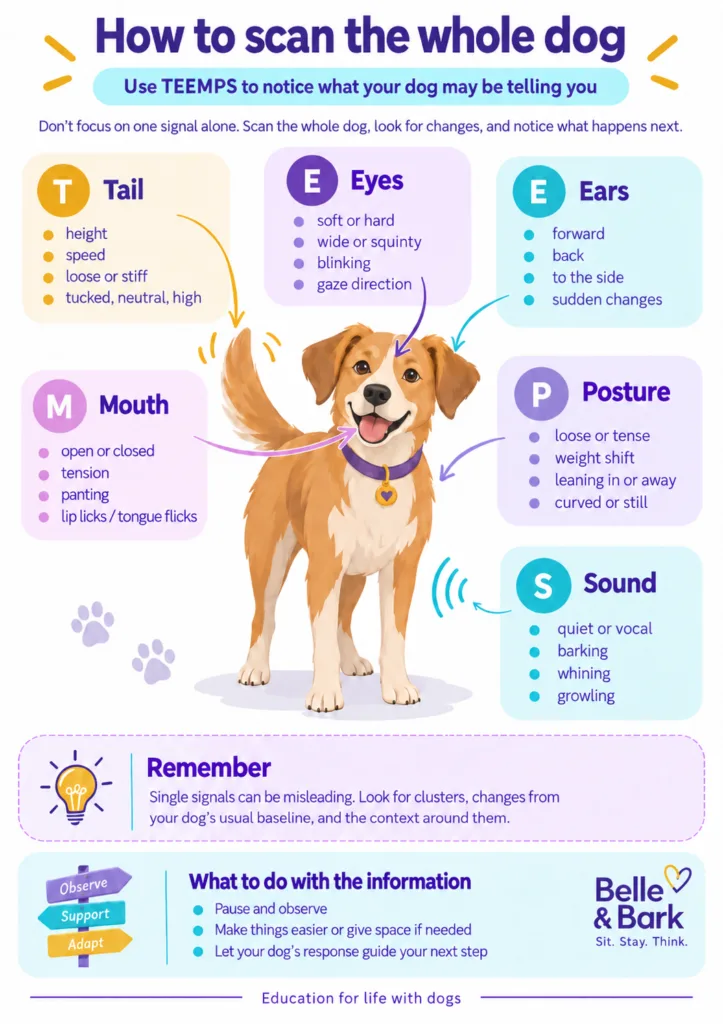
TEEMPS gives you a repeatable way to observe the dog before deciding what support or response may be useful.
Look for clusters, changes and context
Imagine your dog spots another dog across the street. They stop walking, their mouth closes, their body becomes more rigid, their weight shifts forward, and their eyes stay fixed on the other dog.
Another dog might also stop when they notice a dog across the street. Their body curves slightly away, they sniff, glance back at you, and continue moving.
In the first example, several changes happen together: muscle tension increases, movement decreases, the mouth closes, and visual attention becomes sustained. That combination would make me think about distance, how much room the dog has to move, and whether the situation is getting harder for them.
The second dog is still shifting between looking, sniffing, and orienting back to you. I’d give them time to process the situation and continue watching how their body changes as the other dog moves closer or farther away.
Behaviours such as sniffing, yawning, lip licking and turning away are all part of a dog’s normal behavioural repertoire. Their value as body-language information comes from when they appear, what happens alongside them, and whether they represent a change for that dog.
If you see several changes together, such as increased tension, reduced movement, a shift in gaze, or movement away from something, you have more information to work with than you would from any single signal. Familiarity with your dog’s baseline makes those patterns easier to recognize.
When your dog may need more space
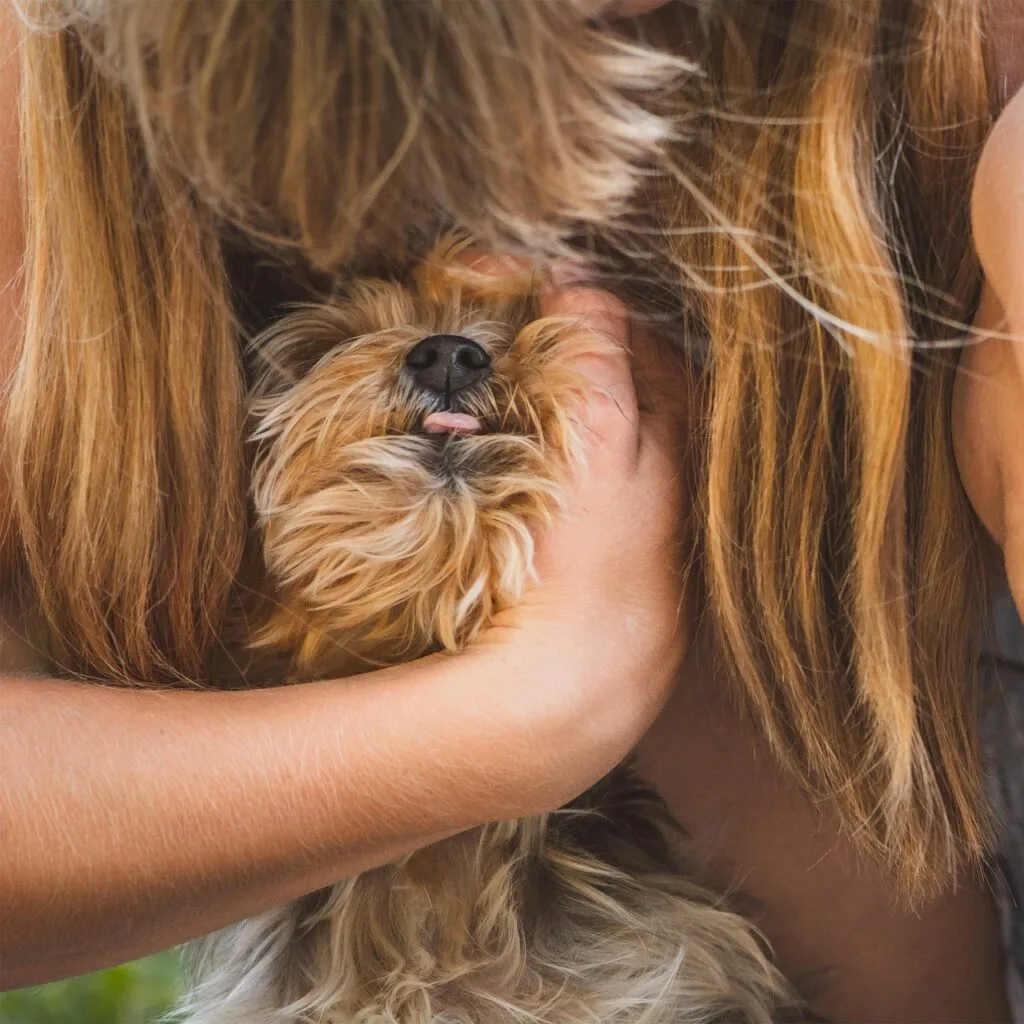
Dogs have many ways of responding when an interaction becomes uncomfortable or too intense. You might see turning away, moving away, shifting weight backwards, lowering the body, repeated lip licking, freezing, a tense closed mouth, a hard stare, growling, showing teeth or snapping.
These behaviours don’t appear in a guaranteed order. Individual dogs show different patterns, and those patterns can also change with context, health, previous experiences and learning history.
Kendal Shepherd’s Ladder of Aggression became well known for illustrating how dogs may show quieter responses before more overt behaviours such as growling, snapping or biting. It can be useful as a reminder to pay attention early, while keeping in mind that dogs don’t all move through the same sequence.
Learning history can shape what a dog does too. If attempts to move away or create distance repeatedly fail, a dog may begin relying more quickly on behaviour that has worked for them in the past.
For guardians, the practical response is to make the situation easier when you see tension building or repeated attempts to disengage. You might move farther away, pause the interaction, ask someone to stop reaching towards your dog, or give them a clear opportunity to leave.
What about shake-offs?
You’ve probably seen your dog give a full-body shake when they aren’t wet. It may happen after play, a greeting, handling, a training exercise or an intense moment on a walk.
Shake-offs are often described as a way for dogs to “release stress” or reset themselves. Recent observational work has found dry shake-offs around transitions, interruptions and changes in activity, and some behaviour professionals have proposed a possible role in emotional regulation or recovery after arousal. That regulatory function is still being explored.
When I notice a shake-off, I look at what happened immediately beforehand and what the dog does next. A dog who shakes and then resumes exploring, softens their posture or re-engages gives us a useful sequence to observe, even if the shake itself doesn’t have one fixed translation.
What should you do with body-language information?
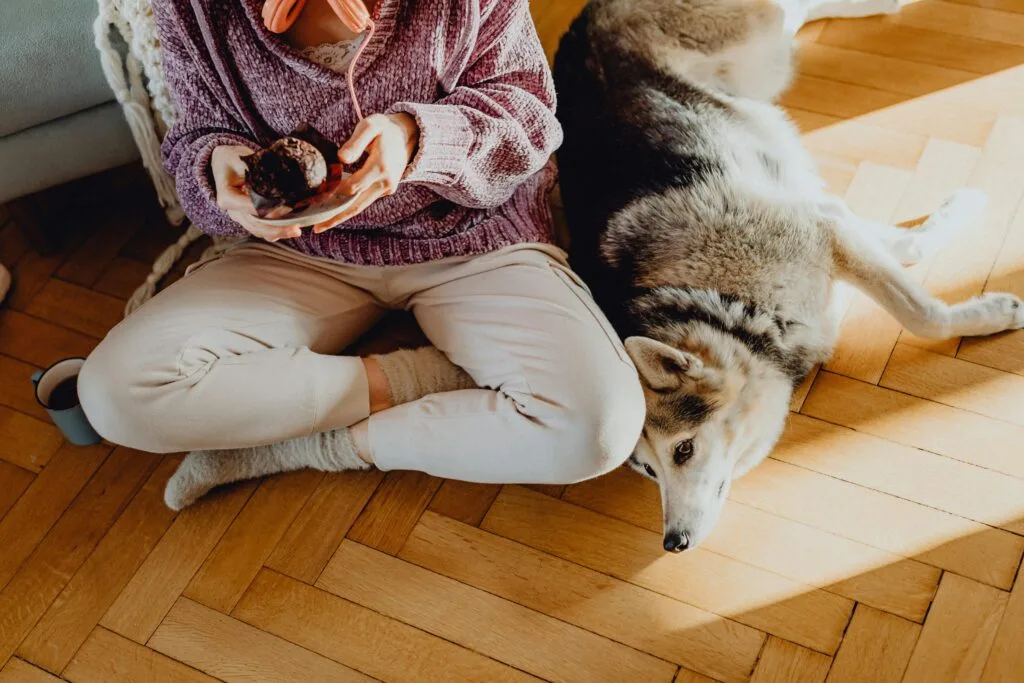
You don’t need to identify every ear position or tail movement for body language to become useful. Start by noticing patterns and changes in the situations you see every day.
If your dog turns away when someone reaches towards them, ask the person to pause. If their body becomes tense as another dog gets closer, create more distance. During handling and cooperative care, small changes in posture, movement or engagement can help you decide when to continue, slow down, or give your dog a break.
If your dog repeatedly stops participating during a training exercise, look at the environment, the difficulty of the task, and whether they need a pause or a different setup.
It’s useful to learn what comfort looks like for your dog too. Loose movement, easy exploration, soft facial muscles, normal breathing, and the freedom to move towards and away from things can all help you recognize when life feels manageable.
As you get more familiar with your dog’s patterns, you can often respond while their communication is still subtle.
Frequently asked questions
My dog wags their tail a lot. Does that mean they’re happy?
A wag tells you that something is happening emotionally, though the tail alone doesn’t tell you exactly what. Look at its height and movement alongside the rest of the dog.
A broad, loose wag on a loose body gives you a different picture from a small, rapid wag on a stiff dog who is staring intently at something. TEEMPS can help you check the eyes, ears, mouth, posture and sounds before drawing a conclusion from the tail.
Why does my dog yawn or lick their lips during training?
Yawning and lip licking can happen in many situations. Your dog may yawn because they’re tired, and food can naturally prompt licking and tongue movements.
During training, look at the surrounding pattern. If your dog also slows down, turns away, disengages or tries to leave, adjust the task, take a break or change the setup.
What does it mean when my dog suddenly freezes?
A pause may mean the dog is gathering information, and freezing can also appear when a dog is highly focused, conflicted or uncomfortable. Look at their gaze, mouth, posture and what is happening around them.
If the body has become tense and the dog is intensely focused on a person, dog or event, give them more space and avoid moving the interaction forward.
Does a growl mean my dog is going to bite?
Growling can happen in several contexts. Dogs may growl during play with other dogs or people, as part of ritualized play behaviour. In other situations, a growl may help create distance or stop something the dog finds uncomfortable.
Look at the rest of the interaction. A loose, bouncy dog who is taking turns and re-engaging in play gives you a very different picture from a stiff dog who is freezing, staring or trying to move away.
If the growl happens alongside increasing tension or attempts to disengage, make the situation easier and give the dog more space. If growling is frequent, escalating, or happening in situations that are difficult to manage safely, professional behaviour support can help identify what is contributing to it.
Do dogs always follow the Ladder of Aggression in order?
No. The ladder illustrates how communication may become more overt as a situation gets harder, while individual dogs can show different behaviours and sequences.
Context, health, previous experiences and learning history all influence what you see, so the ladder works best as a general teaching model rather than a prediction of what one particular dog will do.
What does a full-body shake-off mean?
Dry shake-offs occur around play, greetings, interruptions and transitions between activities. There is growing interest in whether they may sometimes be associated with emotional regulation or recovery from arousal, though the research doesn’t currently support assigning them one fixed meaning.
Notice when the shake happens, what came before it, and what your dog does afterwards. That sequence will usually tell you more than the shake alone.

Tabitha Turton
Tabitha Turton is the founder and trainer at Belle & Bark, offering dog training and behaviour support in Montreal. Her work draws on current behaviour and welfare science, positive reinforcement and Family Dog Mediation, with a focus on understanding the individual dog and the factors shaping their behaviour.
Her writing explores dog behaviour, learning and welfare, translating research and professional education into practical ideas for everyday life with dogs.