Best reinforcer for dog training: What actually works?
Ask what the best reward for dog training is and food will usually come up first. There’s a good reason for that: food is convenient, easy to deliver quickly, and highly valuable to many dogs.
But reinforcement is more interesting than simply finding your dog’s favourite treat. Dogs may also work for play, social interaction, sniffing, movement or access to something they want. What matters is whether the outcome actually makes a behaviour more likely to happen again.
That gives us a useful starting point: the best reinforcer is the one that works for your dog, for that behaviour, in that moment.
Quick takeaways
- A reinforcer is something that makes a behaviour more likely to happen again.
- Food is often a practical and effective choice, especially when teaching something new.
- Play, petting, social interaction, sniffing and access to the environment can also reinforce behaviour.
- Reinforcer value changes with the dog, the situation and what else is available.
- A dog who ignores food outside may be telling you something about the environment, not simply that they are “not food motivated.”
- Watch what changes behaviour rather than assuming something should be rewarding.
What is a reinforcer in dog training?
In everyday conversation, we often use reward and reinforcer to mean the same thing. Behaviourally, a reinforcer has a more specific definition: it is a consequence that increases the future likelihood of a behaviour.
If your dog sits and you give them chicken, the chicken is functioning as a reinforcer if sitting becomes more likely under similar circumstances. If your dog takes the chicken but the behaviour does not increase, we cannot automatically assume the food is reinforcing that behaviour.
This is one reason it helps to pay attention to what your dog actually does over time. We may think praise, a treat or a toy should be rewarding, but the effect on behaviour tells us whether it is functioning as reinforcement.
Primary and conditioned reinforcers
You may hear trainers distinguish between primary, or unconditioned, reinforcers and conditioned reinforcers.
An unconditioned reinforcer has value without needing to acquire that value through learning. Food is the most familiar example because eating meets a biological need.
A conditioned reinforcer gains its value through association with other valued outcomes. A marker such as “Yes!” or a clicker is a good example: at first, the sound may mean very little. After it repeatedly predicts food or another reinforcer, it becomes meaningful to the dog.
Real life does not always fit neatly into simple categories. Social interaction, play, movement and opportunities to sniff can all be valuable to dogs, and their reinforcing value depends on the individual and the situation.
What makes a good reinforcer?
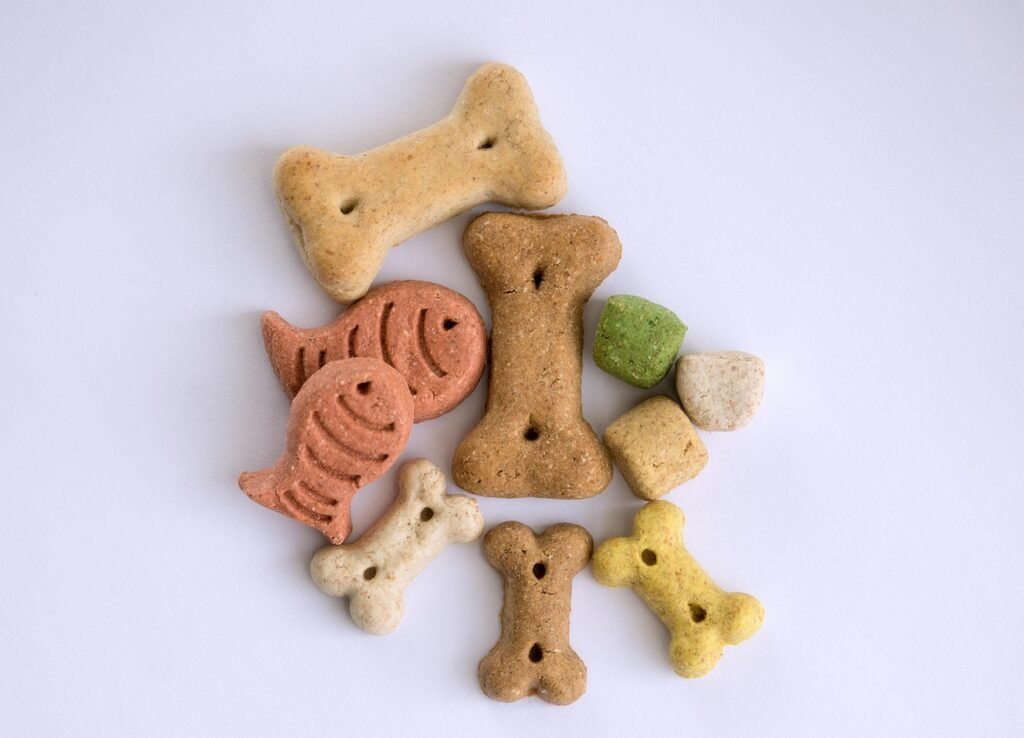
A useful reinforcer needs to matter enough to compete with whatever else is happening. That is one reason food works so well in training: for many dogs, it is easy to consume, easy to deliver repeatedly and valuable enough to support learning.
Research comparing food with other rewards has generally found food to be a strong choice. Most dogs in one study preferred food to petting when both were readily available, and a more recent study found food was more likely to function as an effective reinforcer than leisure items. Individual dogs still differed, which is exactly why it is worth paying attention to the dog in front of you.
Food
Food is particularly useful when teaching new skills because you can deliver small amounts quickly and precisely. Kibble may work perfectly well in a quiet kitchen, while chicken, cheese or another favourite food may be more useful when the task or environment is more challenging.
Higher-value food does not automatically make training better. If your dog is already engaged and learning happily for kibble, there may be no reason to bring out the roast chicken.
Appetite matters too. A dog who has just eaten a meal may value food differently from a hungry dog, and preferences can change from day to day.
Praise, petting and social interaction
Many of us instinctively praise our dogs when they do something we like, but verbal praise alone may not be especially reinforcing for every dog. Research comparing petting with spoken praise found that dogs generally preferred petting, while praise by itself produced relatively little proximity-seeking behaviour.
Social interaction can still function as reinforcement. Another study found that interaction involving petting and praise maintained responding above conditions where no reinforcement was provided.
The practical takeaway is simple: if your dog loves affection and seeks it out, social interaction may be valuable. If they merely tolerate being patted on the head, it is probably not the powerful reward we sometimes assume it is.
Play
For dogs who love toys or interactive games, play can be extremely useful. A short game of tug, chasing a toy or another favourite interaction can reinforce behaviour and bring some movement into a training session.
Play can take longer to deliver than a tiny treat, so it may suit some exercises better than others. It can be especially useful when the activity itself matters greatly to the dog.
Sniffing, movement and access to the environment
Some of the best reinforcers are already around you.
Imagine your dog wants to sniff a lamppost. You pause, wait for a moment of loose leash or a check-in, then say “Go sniff” and move towards it. Access to the smell may reinforce the behaviour that preceded it.
The same idea can apply to moving forward on a walk, going through a door, greeting someone, getting into the car, exploring an area or accessing another activity the dog wants.
These everyday reinforcers can be particularly useful because they connect training to the things the dog was already hoping to do.
How to find what your dog values
You do not need to create a permanent ranking of rewards. It is more useful to build a reinforcer menu and learn which options work in different situations.
Notice what your dog chooses when they have options. Which treats disappear first? Do they immediately bring a toy back to continue the game? Do they lean into petting or wander away? On walks, are they most interested in food, movement, sniffing or access to particular places?
Preference can give us useful clues about what may function as reinforcement. Studies using preference assessments with dogs have found that preferred food items can predict which foods will be more effective reinforcers.
Then watch what happens to the behaviour. If your dog begins offering it more readily, you have stronger evidence that your chosen outcome is doing its job.
Context changes value
A reinforcer that works beautifully in one place may have very little effect somewhere else.
Your dog might happily work for kibble in the living room and barely notice it beside a squirrel. The squirrel, the smells, movement or the general environment may simply matter much more at that moment.
Stress can affect food-taking too. Some worried dogs stop eating altogether, while others continue eating even when they are uncomfortable. Food refusal is useful information, but it needs to be considered alongside the rest of the dog’s behaviour.
When a familiar reinforcer suddenly stops working, consider the whole situation. The exercise may be too difficult, the environment too distracting, the dog may need more distance, or another consequence may simply be more valuable.
Using reinforcers in everyday training
Good reinforcement does not require carrying roast chicken everywhere you go. What you use can change as a skill develops and as you learn what matters to your dog.
When teaching something new, frequent reinforcement makes it easier for the dog to understand what is working. Once a behaviour is well established, reinforcement can become more varied and more closely tied to everyday life.
For example, checking in during a walk might earn a treat sometimes and an opportunity to go sniff at other times. Waiting calmly at the door might make the door open. Coming when called during play can be followed by being released to play again.
This is also why it is useful to keep several reinforcers available rather than relying on one favourite food for every situation. You can choose something that fits the behaviour, the environment and what your dog wants in that moment.
If you use a marker such as “Yes!” or a clicker, remember that the marker tells the dog which behaviour earned reinforcement. The reinforcer that follows is what helps make that behaviour worth repeating.
The best reinforcer depends on the dog and the moment
There is no single best reinforcer for every dog. Food earns its reputation because it is practical and highly effective for many dogs, especially when we are teaching new skills. Other outcomes can be just as meaningful in the right context.
Learning what your dog values also gives you useful information about them. A dog who wants to sniff every hedge, chase a toy, seek physical contact or explore a new environment is showing you what they find worthwhile.
Use that information. Reinforcement works best when we stop thinking only about what we want the dog to do and also pay attention to what makes doing it worthwhile for them.
Want help making training more rewarding?
Belle & Bark’s Everyday skills and Puppy foundations programs use positive reinforcement to build practical skills while taking the individual dog’s preferences, environment and needs into account.

Tabitha Turton
Tabitha Turton is the founder and trainer at Belle & Bark, offering dog training and behaviour support in Montreal. Her work draws on current behaviour and welfare science, positive reinforcement and Family Dog Mediation, with a focus on understanding the individual dog and the factors shaping their behaviour.
Her writing explores dog behaviour, learning and welfare, translating research and professional education into practical ideas for everyday life with dogs.