Mental exercise for dogs: Benefits and simple ideas
A long walk can leave a dog ready for a nap, but physical activity is only one part of a satisfying day. Dogs also benefit from opportunities to sniff, explore, solve problems, learn new things and make choices about how they interact with their environment.
That’s where mental exercise comes in. It can be as structured as a training session or as simple as letting your dog investigate a new walking route at their own pace. The best activities give your dog something meaningful to do and suit their interests, abilities and current energy level.
Quick takeaways
- Mental exercise includes sniffing, exploring, learning, problem-solving and making choices.
- A good challenge should stretch your dog’s skills without leaving them overwhelmed or frustrated.
- Mental activity can be tiring, but exhaustion isn’t the goal.
- Enrichment doesn’t need to involve expensive puzzle toys or formal training.
- Free exploration and opportunities to make choices can be mentally engaging too.
- Different dogs find different activities rewarding, so pay attention to what your dog actually enjoys.
What counts as mental exercise for dogs?
Mental exercise is any activity that gives your dog opportunities to use their brain in a meaningful way. That can include learning how to solve a food puzzle, searching for something with their nose, figuring out a new training exercise, or exploring an unfamiliar environment.
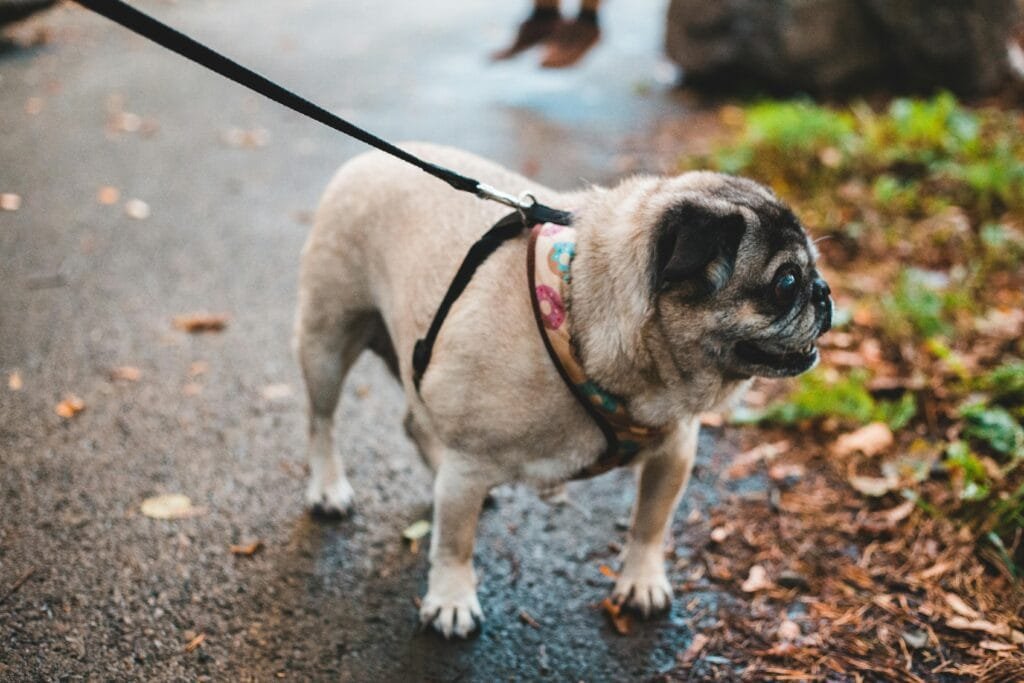
Sniffing absolutely counts. A dog following a scent trail or investigating the neighbourhood is gathering information and making decisions about where to go and what deserves more attention. Scent-based activities can range from a leisurely sniff walk to structured nosework, tracking or finding hidden food.
Learning is another obvious source of mental activity. Teaching a new skill, practising a cooperative-care behaviour or shaping a new behaviour asks the dog to notice what is happening, try things and adjust based on the consequences.
Mental exercise can also be much less structured. Give a dog safe objects or an interesting environment to explore and they may spend time investigating, manipulating and experimenting without you telling them what to do next.
These free-operant opportunities are especially interesting because the dog gets to make choices and discover how their own behaviour affects the environment. There is no single correct response they need to produce for us.
Research into cognitive enrichment across animal species has increasingly looked beyond simply providing stimulation and towards opportunities for challenge, competence, agency and control. Individual differences matter too: an activity that engages one animal may hold very little value for another.
Why mental exercise matters
Dogs evolved to interact with a changing environment. They search, investigate, learn, make choices and solve problems. Our homes provide safety and comfort, but daily life can also become quite repetitive, particularly when most decisions about when to eat, walk, play or explore are made for them.
Mental enrichment gives dogs more opportunities to use those abilities. Problem-solving has long been discussed in animal-welfare science as a potentially valuable source of challenge when the animal has the skills and resources needed to solve the problem.
The important word there is challenge. More difficult does not automatically mean more enriching.
Finding the right balance between skill and challenge
One useful way to think about enrichment comes from Dr. Kristina Spaulding’s discussion of skill and challenge. An activity can ask a lot or a little of the dog, and the dog may have a high or low level of skill for that particular task.
| Low challenge | High challenge | |
| Low skill | Easy, with limited opportunity to stretch existing abilities | Risk of frustration or overwhelm |
| High skill | Familiar and often easy to complete | Engaging work that lets the dog use and extend their skills |
That high-skill, high-challenge area is particularly interesting for enrichment. The dog has enough experience to understand the problem and a real opportunity to work something out.
This is also why the same activity can change over time. A food puzzle that once required concentration may become something your dog empties in 30 seconds without much thought. You can add a little complexity, introduce a different problem, or choose another activity altogether.
On the other hand, a difficult puzzle handed to a dog with no experience solving that type of problem may produce frustration rather than useful engagement. Watch how your dog responds. Persistence, curiosity and trying different approaches tell you something quite different from frantic pawing, abandoning the activity or repeatedly looking to you for help.
Mental fatigue and recovery

Mental work can be tiring. Anyone who has spent an afternoon learning something difficult will recognize that feeling, and I’ve certainly seen it in dogs after demanding training days.
I became particularly aware of this during my dog-trainer certification. Our dogs could spend long Saturdays travelling, learning, waiting, working in a stimulating environment and processing a lot of new information. Afterwards, they often slept deeply.
I used to think of that primarily as proof that training could tire a dog more effectively than exercise. I see it a little differently now. Those were high-load days involving learning, novelty, concentration, environmental stimulation and social experiences. Rest afterwards was part of processing and recovering from all of that.
There is some research showing that prior cognitive demands can affect dogs’ performance on later tasks, but the biology of mental fatigue is complex. The evidence doesn’t support a simple explanation where training rapidly “uses up” particular brain chemicals. Mental work may contribute to fatigue, while the type of task, duration, difficulty, stress and individual dog all affect what we see afterwards.
So if someone asks how to mentally exhaust a dog, I’d shift the goal slightly. A satisfying enrichment session may leave a dog ready to rest, but success is better measured by engagement, enjoyment and whether the activity added something worthwhile to their day.
Simple ways to give your dog more mental exercise
You don’t need a cupboard full of puzzle toys. Some of the richest opportunities come from activities dogs already enjoy.
Let them use their nose
Give your dog time to sniff on walks rather than measuring every outing by distance. Scatter part of a meal in grass, hide a few treats around a room, or let them search for a familiar toy.
You can make scent games progressively more challenging as your dog gains experience. Start somewhere easy enough for them to understand the game, then gradually increase the search area or difficulty.
Give them something to solve
Food puzzles can be useful, but household objects work too. A few treats tucked into crumpled paper inside a cardboard box can create a simple search-and-manipulation problem for a dog who enjoys shredding and investigating.
Safety matters here. Choose materials appropriate for your dog and supervise anything they may swallow or dismantle.
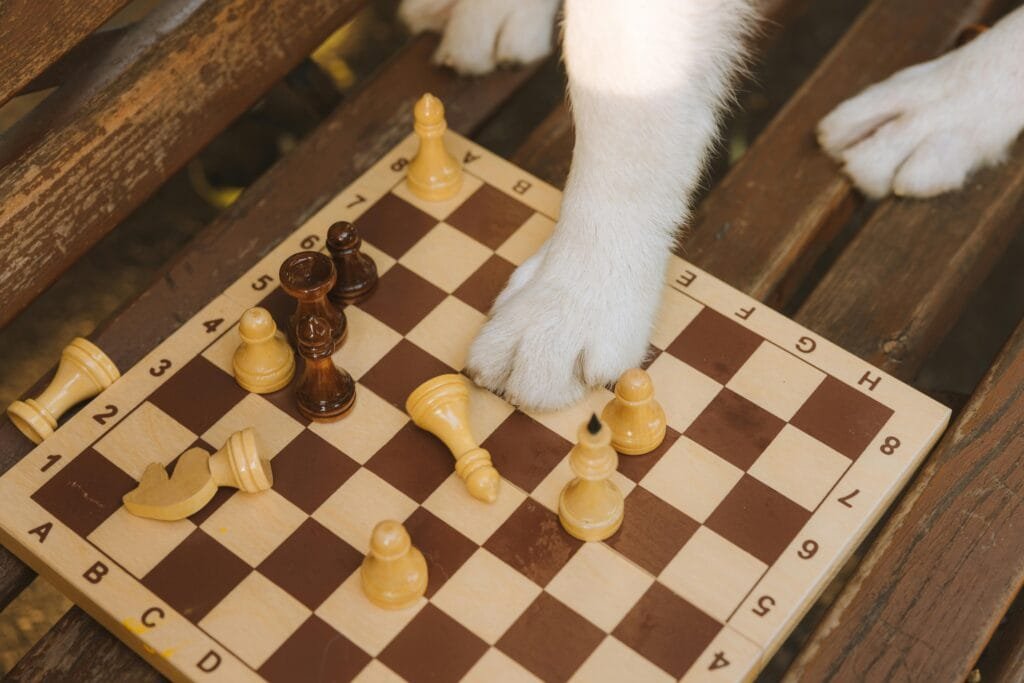
You can also alter familiar activities slightly. Hide food under one of several cups, wrap treats loosely in a towel, or create a simple obstacle that requires your dog to work out how to reach something.
Learn something together
Training is an easy way to add mental exercise because you can adjust the difficulty almost endlessly.
Teach a new skill, work on a trick, practise cooperative care or try shaping, where you reward small steps towards a finished behaviour and allow the dog to figure out what earns reinforcement.
Keep sessions short enough that your dog still wants to participate. A few engaged minutes can be much more useful than pushing through a long session after their concentration has gone.
Create opportunities for choice and exploration
Some mental exercise can happen without asking your dog to perform anything.
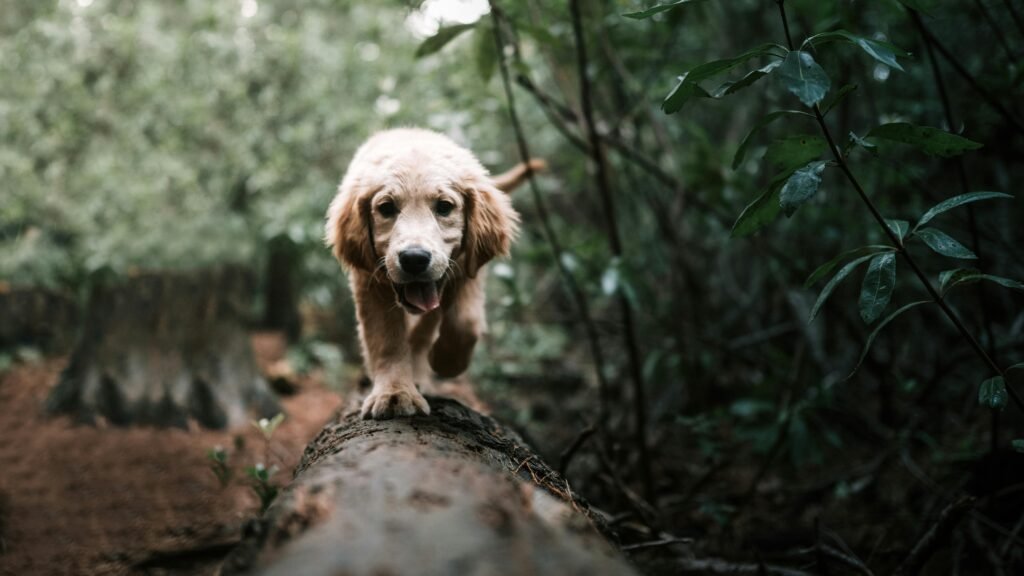
Set out a few safe, unfamiliar objects and let your dog decide whether and how to investigate them. Offer different surfaces, boxes, objects that move safely, or items with interesting smells. You can also give your dog more choice during walks, allowing them to choose between two directions or spend extra time investigating somewhere that interests them.
This kind of free-operant exploration lets the dog interact with the environment on their own terms. They can approach, retreat, investigate further or move on.
Choice and environmental control are increasingly recognized as relevant considerations in enrichment and animal welfare, alongside opportunities for varied behaviour.
Different dogs need different enrichment
There is no universal mental-exercise prescription for dogs.
A scent-driven Beagle may happily investigate a patch of grass for ten minutes. Another dog may light up when you begin a shaping session. Some love dismantling cardboard, searching for hidden objects or exploring new places. Others prefer familiar activities and can find novelty stressful.
Age, health and physical ability matter too. Mental enrichment can be especially useful when physical exercise needs to be reduced because of injury, ageing or recovery, although activities should still be matched to the dog’s medical needs.
Pay attention to what happens during and after the activity. Does your dog voluntarily return to it? Do they stay curious when something becomes a little harder? Can they walk away? Do they settle afterwards, or does the activity seem to leave them increasingly frustrated or wound up?
Those observations will tell you far more than a list of the “best brain games for dogs.”
Enrichment is part of the bigger picture
Mental exercise is one part of meeting a dog’s needs. Physical movement, rest, social connection, opportunities to sniff and explore, a sense of safety, and the ability to make meaningful choices all contribute to their daily experience.
You don’t need to keep your dog entertained every minute or turn enrichment into another item on an impossible daily checklist. Look for small opportunities that fit naturally into your life: a slower sniffy walk, five minutes learning something together, a cardboard search after dinner, or a chance for your dog to investigate something new.
Good enrichment gives your dog opportunities to use skills they already have, develop new ones and interact with their world in ways that matter to them.
Want help finding the right activities for your dog?
If your dog seems restless, struggles to settle, or could use more satisfying things to do, we can look at their daily routine, environment and individual interests together.
Belle & Bark’s training and behaviour services take the whole dog into account, including opportunities for movement, exploration, learning, choice and rest.
Explore Enrichment sessions to learn more.

Tabitha Turton
Tabitha Turton is the founder and trainer at Belle & Bark, offering dog training and behaviour support in Montreal. Her work draws on current behaviour and welfare science, positive reinforcement and Family Dog Mediation, with a focus on understanding the individual dog and the factors shaping their behaviour.
Her writing explores dog behaviour, learning and welfare, translating research and professional education into practical ideas for everyday life with dogs.