Marker training for dogs: What it is and how to use it
Training can get confusing surprisingly quickly. Your dog sits, you reach for a treat, they stand up, and by the time the food arrives it may not be obvious which part of that sequence earned it.
A marker helps make the right moment clear. In dog training, a marker is a sound or word that tells your dog exactly which behaviour earned a reward. A clicker is one option, and a short verbal marker such as “Yes!” works too.
The basic pattern is simple: Behaviour → mark → reward
Quick takeaways
- A marker tells your dog exactly which behaviour earned reinforcement.
- Common markers include a clicker or a short word such as “Yes!”
- A marker is different from both a cue and a reward.
- You may hear the process of teaching a marker described as loading, charging or conditioning the marker.
- Clickers can be useful for precision, but you don’t need one to use marker training effectively.
What is a marker in dog training?
A marker tells your dog, essentially, “That was it.” Imagine you’re teaching your dog to touch your hand with their nose. The instant their nose makes contact, you say “Yes!” and then give them a treat.
The treat rewards the behaviour, while the marker identifies the moment that earned it. It also acts as a bridge between the behaviour and the reward. Even if it takes another second or two to deliver the treat, the marker helps your dog understand which moment mattered.
Marker training is sometimes called mark-and-reward training, which describes the process quite neatly.
Marker, cue and reinforcer: What’s the difference?
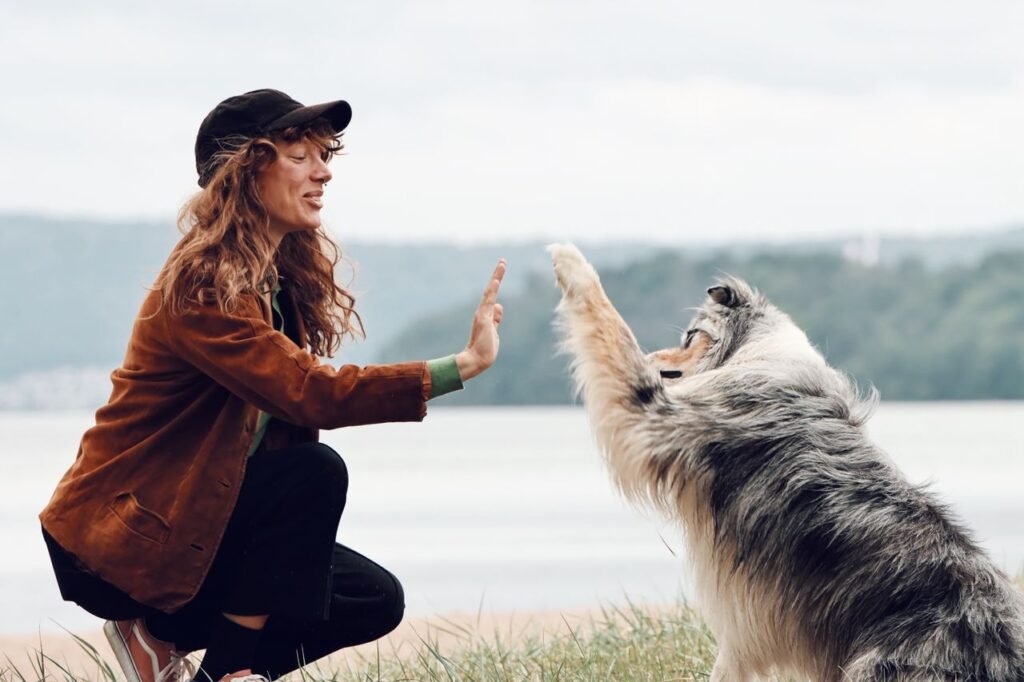
These terms do different jobs. A cue is a request for a behaviour your dog has learned. “Sit” is a verbal cue, while presenting your open palm can be a visual cue for a hand target.
A marker tells your dog when they’ve done the behaviour you want to reward. A reinforcer is what makes that behaviour more likely to happen again. Food is especially useful in training, but play or access to something your dog wants can also reinforce behaviour.
So if you say “Sit,” your dog sits, you say “Yes!” and give them a piece of chicken:
- “Sit” = cue
- Sitting = behaviour
- “Yes!” = marker
- Chicken = potential reinforcer
The chicken only counts as reinforcement if sitting becomes more likely in the future. In other words, the dog’s response tells us whether something is actually reinforcing.
If you want to go deeper into reinforcement and learning, How dogs learn: Essential science for better training covers the broader picture.
How does marker training work?
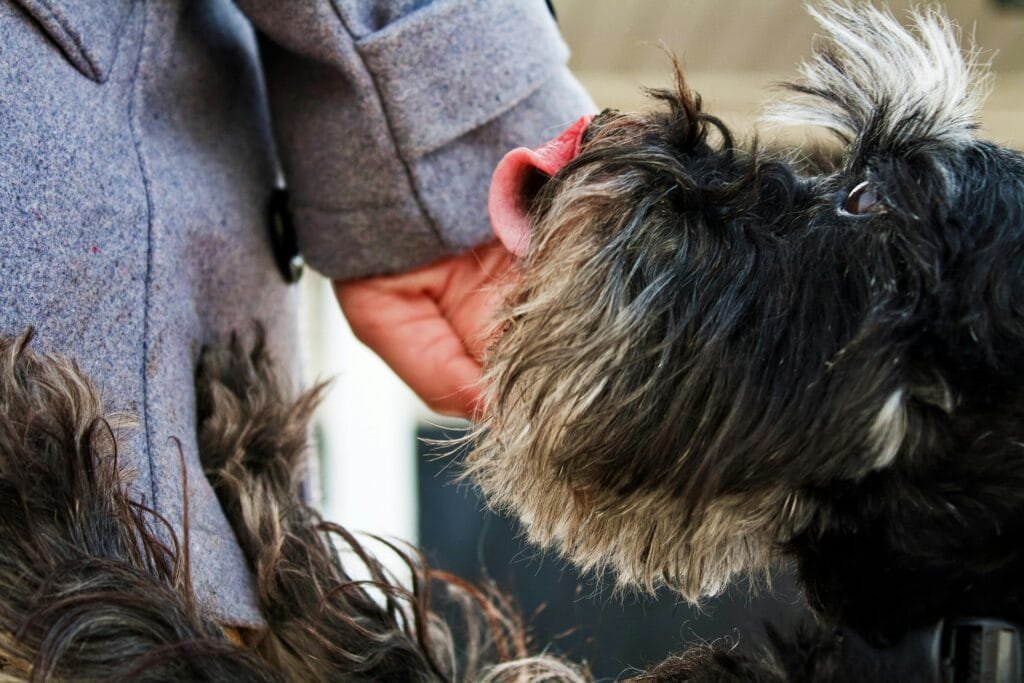
At first, “Yes!” or the sound of a clicker may mean nothing to your dog. It becomes meaningful when it is repeatedly followed by something they value. You may hear trainers call this charging, loading or conditioning the marker.
To get started:
- Give the marker.
- Follow it with a small treat.
- Repeat for several easy repetitions.
There’s no need for a long formal exercise. Your dog will continue learning what the marker means as you use it during training.
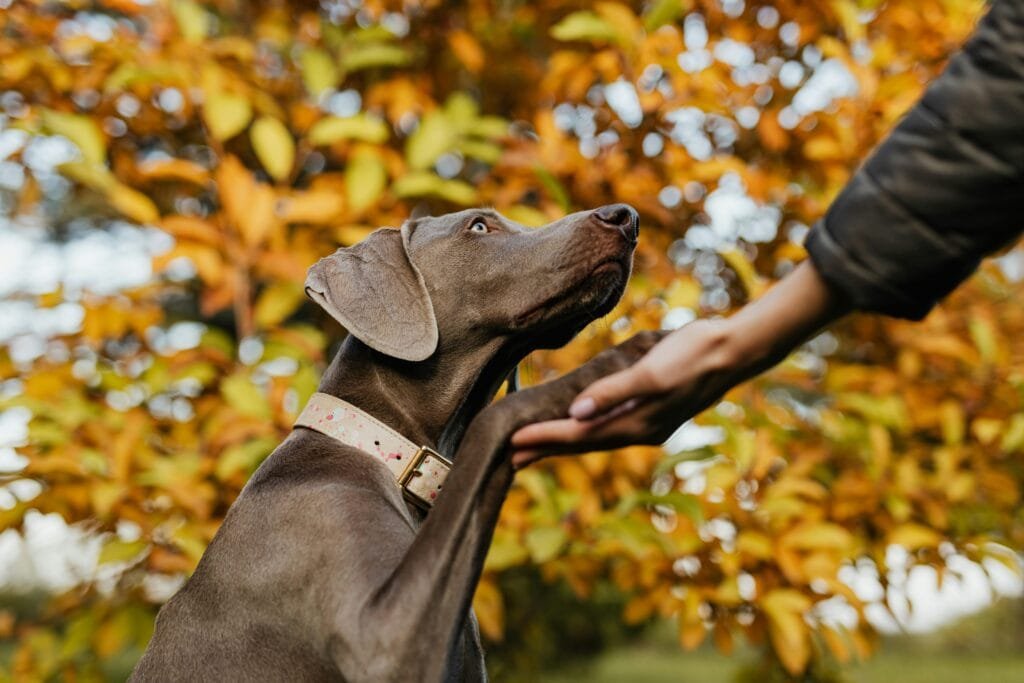
Once the connection is established, you can use the marker to pinpoint behaviours you want to reward. If you’re teaching a hand target, mark the instant your dog’s nose touches your hand. If your dog checks in with you on a walk, mark the moment they turn towards you.
Timing matters
A marker works best when it identifies the behaviour you actually meant to reward. If you’re teaching a sit, mark while your dog’s bum is touching the floor. If you wait until they’ve stood up and moved towards you, the message becomes less clear.
Timing matters even more when you’re trying to capture a quick or very small behaviour. It takes practice, so start with simple behaviours and watch what your dog is doing at the moment you mark. Most of us get better at this by doing it rather than aiming for perfect timing from the start.
Common marker-training mistakes
Using the marker to get your dog’s attention
Once “Yes!” becomes meaningful, it can be tempting to say it when your dog is distracted so they’ll look at you. That gives the marker two different jobs and can make its meaning less clear. Save it for the behaviour you’re rewarding.
Marking too late
If several things happen before the marker, your dog may not know which moment mattered. This is especially important when you’re working with fast or very precise behaviours.
Repeating the marker
“Yes, yes, yes!” may feel encouraging to us, but a marker works best as one clear signal. Mark once, then reward.
Marking without rewarding
When your dog is first learning what the marker means, follow it with a reward consistently. That reliable connection is what gives the marker meaning.
Once the association is well established, reinforcement can become more flexible depending on the behaviour and context.
Clicker or verbal marker: Which is better?
Both can work well. A clicker can be useful when you need very precise timing because its short sound makes it easier to capture a tiny movement or a fast behaviour.
A verbal marker is convenient because you always have it with you, which helps when you’re already juggling a leash and treats. At Belle & Bark, I often teach guardians to use a simple “Yes!” because it fits easily into everyday life.
Research hasn’t shown one marker to be universally better than another. The best choice is the one that helps you give your dog clear, well-timed feedback.
What can you use marker training for?
Teaching new behaviours
When your dog is learning something new, a marker helps show them which part was worth repeating. It’s especially useful with shaping, where we reward small steps towards a finished behaviour instead of waiting for the whole thing at once.
Capturing behaviours you like
You don’t always need to ask first. If your dog voluntarily lies on their bed or checks in with you during a walk, you can mark and reward it when it happens.
Working at a distance
A marker is also useful when you can’t deliver the reward immediately. Your dog performs the behaviour, you mark it, and the reward follows a moment later.
Supporting behaviour work
Markers can be useful in behaviour cases too. For example, with a dog who reacts to other dogs, you might mark when they notice another dog and then turn back towards you.
The marker sits within a much bigger behaviour plan. Distance, the environment, stress levels, safety and the dog’s ability to cope with the situation all matter. If a dog is overwhelmed, the first priority is to make the situation easier and give them enough space to recover.
Good behaviour support starts with understanding what the dog is experiencing, including the needs or emotions behind what we might casually call “bad behaviour.”
What does the science say about marker training?
Research hasn’t found a simple answer such as “clickers make dogs learn faster.” Studies with companion dogs have found that dogs can learn successfully with a clicker, a verbal marker, or food delivered without an added marker.
A 2020 review of conditioned reinforcement research also found that the evidence is still fairly limited and varies between studies. More recently, a 2025 study with detection dogs found some advantages for clicker-trained dogs, including faster learning on parts of the task.
Detection work often involves precise behaviour at a distance, where the reward cannot arrive immediately. In that kind of situation, a marker can be especially useful for bridging the gap between the behaviour and the reward.
Overall, I think of a marker as a communication tool. Its value comes from helping us tell the dog which moment mattered.
Do you have to use a marker forever?
No. Markers are especially useful when your dog is learning something new, when you’re refining a behaviour, or when precise feedback helps. Once a behaviour is well established, you may not need to mark every repetition.
Reinforcement still matters because behaviour needs a reason to remain worthwhile, although what you use and how often you use it may change over time.
If you’re interested in choosing rewards that actually matter to your dog, What’s the best reinforcer for dog training? takes a closer look at food, play, praise and everyday rewards.
Clear training is a two-way conversation
One of the things I like about marker training is that it encourages us to look at our own teaching too. If training isn’t going well, it’s worth asking whether we marked the behaviour we wanted, whether the reward was actually valuable, and whether the exercise was realistic in that environment.
Dogs are learning from us all the time, and markers give us a simple way to make our side of that conversation clearer.
Want some help making training click?
If you’re working on puppy foundations or everyday skills and training feels muddled, we can look at timing, reinforcement, the environment and how to break skills into manageable steps.
Belle & Bark offers private puppy and everyday-skills training in Montreal, built around clear communication, positive reinforcement and the individual dog in front of us.
Explore Puppy foundations or Everyday skills to find the right place to start.

Tabitha Turton
Tabitha Turton is the founder and trainer at Belle & Bark, offering dog training and behaviour support in Montreal. Her work draws on current behaviour and welfare science, positive reinforcement and Family Dog Mediation, with a focus on understanding the individual dog and the factors shaping their behaviour.
Her writing explores dog behaviour, learning and welfare, translating research and professional education into practical ideas for everyday life with dogs.